| Availability: | |
|---|---|
| Quantity: | |
J-VALVES
Structural Features
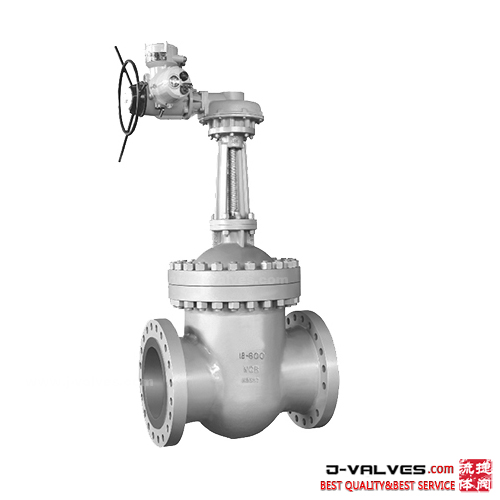
Carbon Steel Material: The valve body is made of high-quality carbon steel (WCB), which has high strength and good corrosion resistance. It can resist the erosion of various chemical media and extend the service life of the valve.
Flanged Connection: Adopts a standard flanged connection method compliant with the ASME B16.5 standard, ensuring reliable installation and sealing performance.
Electric Actuator: Equipped with a high-performance electric actuator to realize remote control and automated operation, enhancing the flexibility and safety of the system.
Bidirectional Sealing: The unique sealing design ensures reliable sealing during both forward and reverse fluid flow, effectively preventing medium leakage and guaranteeing the safe operation of the pipeline system.
Fire-Safe Design: Complies with the API 607 standard. Even in the event of a fire, the valve can maintain sealing performance to prevent medium leakage and ensure system safety.
Anti-Static Device: Equipped with a built-in anti-static device, which effectively prevents static accumulation, reduces the risk of fire and explosion, and is particularly suitable for controlling flammable and explosive media.
Compact Design: With a small volume and light weight, it is easy to install and integrate into existing systems, saving space.
Technical Specifications
Nominal Diameter: 18″ (DN450)
Pressure Rating: 600LB (PN100)
Temperature Range: -29℃ to +425℃
Materials:
Valve Body: Carbon Steel (WCB)
Gate Disc: Carbon Steel (WCB) + Cemented Carbide (e.g., Stellite No.6)
Valve Stem: Stainless Steel (304/316)
Sealing Material: PTFE, RPTFE
Connection Method: Flanged Connection (compliant with ASME B16.5 standard)
Operation Mode: Electric
Design Standards: API 600, ASME B16.34
Testing Standards: API 598, ISO 5208
Fire-Safe Design: API 607
Applicable Media: Water, oil, gas, chemical media, etc.
Application Scenarios
Oil and Gas Industry: Used in oil and gas field exploration, gathering, transportation, and processing systems to ensure reliable isolation and control of media.
Chemical Industry: Suitable for the transportation and reaction systems of various chemical media, preventing medium leakage and ensuring production safety.
Pharmaceutical Industry: Applied in pipeline systems during pharmaceutical production to ensure medium isolation and cleanliness in the drug manufacturing process.
Food and Beverage Industry: Meets food-grade requirements and is used in pipeline systems for food and beverage production, ensuring hygiene and safety.
HVAC: Used in cooling water systems, hot water systems, etc., to ensure the efficient operation of the system.
General Industrial Applications: Suitable for the control and isolation of media such as water, oil, and gas.
Advantages and Value
High Reliability: The carbon steel material and compact design ensure the valve operates stably in medium-to-high pressure and medium-to-high temperature environments, reducing maintenance frequency and downtime.
High Safety: The fire-safe and anti-static designs, along with reliable sealing performance, effectively reduce leakage risks and protect the safety of personnel and equipment.
Automated Operation: The electric actuator enables remote control and automated operation, improving the flexibility and safety of the system.
Easy Installation and Maintenance: The flanged connection simplifies the installation process and facilitates maintenance and overhaul.
Wide Applicability: Multiple material options and a broad range of pressure and temperature ratings allow it to adapt to various complex working conditions and medium characteristics.
In demanding industrial environments, backflow prevention is critical for maintaining pipeline safety and protecting pumps, compressors, and process equipment. Among various check valve materials, C95800 Nickel Aluminum Bronze swing check valves have become a preferred solution for marine engineering, offshore platforms, desalination plants, and seawater systems due to their outstanding corrosion resistance and long-term durability.
Strainers are critical components in industrial piping systems, designed to remove debris, protect downstream equipment, and ensure uninterrupted process operation. In high-pressure applications—common in oil and gas, petrochemical, power generation, and offshore systems—selecting the appropriate strainer type is essential to maintain system integrity, reduce maintenance costs, and enhance safety.
Triple offset butterfly valves are widely used in oil and gas, LNG, petrochemical, and power generation industries because of their excellent sealing performance and high-temperature resistance. To ensure safety and reliability, manufacturers must follow strict API standards during production and testing.
Nickel Aluminum Bronze (NAB) Y-strainers are widely recognized for their outstanding corrosion resistance in marine, offshore, and industrial fluid systems. In environments where seawater, salt spray, chlorides, and aggressive media can rapidly damage standard materials, NAB Y-strainers provide long-term durability and reliable filtration performance.
Unexpected industrial pipeline shutdowns often stem from backflow, water hammer, and corrosion leaks. The J-VALVES 2.5" 300LB C95800 Nickel Aluminum Bronze check valve minimizes unplanned downtime and maintenance costs with high-strength corrosion-resistant material, fast-response design, and long service life, ensuring continuous system operation.
API 6D vs CE certification: which matters more? Compare compliance, safety and applications of J‑VALVES 600LB A105 trunnion ball valve in industrial pipelines for better selection.
Check valves are essential components in industrial piping systems, designed to prevent reverse flow and protect pumps, compressors, and process equipment. Among the most commonly used designs are lift check valves and swing check valves. Although both serve the same basic function, their internal structures, flow characteristics, and application suitability are significantly different.
Marine piping systems operate in some of the harshest industrial environments. Continuous exposure to seawater, salt spray, moisture, and high-flow conditions creates serious challenges for filtration equipment. Among various material options, Nickel Aluminum Bronze (NAB) basket strainers have become a preferred solution for marine and offshore applications due to their outstanding corrosion resistance, mechanical strength, and long service life.
Large diameter gate valves are widely used in oil and gas, power generation, petrochemical, water treatment, and offshore industries. These valves control high-volume fluid flow under demanding operating conditions, making material selection one of the most important factors in valve performance and service life.Choosing the correct materials for valve bodies, gates, stems, and sealing components helps improve durability, corrosion resistance, pressure reliability, and operational safety.
Y-strainers are essential components in LNG transport systems, protecting pumps, valves, and flow meters from debris and solid particles. Because LNG operates at extremely low temperatures around -162°C, material selection for Y-strainers is critical for safety, durability, and system reliability.
C95800 gate valves are widely used in industrial, marine, and chemical piping systems for their corrosion resistance, durability, and reliable flow control. Choosing the correct body connection type—flanged, threaded, or welded—is critical to ensuring system integrity, ease of maintenance, and safety. Understanding the advantages of each connection type helps engineers optimize valve selection for their specific applications.
Y-strainers are widely used in industrial piping systems to protect pumps, valves, and sensitive equipment from particulates and debris. While ensuring filtration efficiency is critical, managing pressure drop and optimizing flow rate are equally important to maintain system efficiency, energy savings, and equipment longevity.
When system pressure fluctuates, valves face a higher risk of backflow, shock, and unstable sealing. Learn why more engineering projects choose the J-VALVES 3" 300LB WCB check valve to improve system stability, protect equipment, and reduce maintenance needs.
In LNG systems, a valve must do more than open and close. It must perform reliably in extreme low-temperature conditions while keeping tight sealing and safe operation.A standard ball valve may work well in normal industrial service, but when the temperature drops to -196°C, common problems become m
Triple eccentric butterfly valves are widely used in industrial piping systems where tight shut-off, high-pressure handling, and minimal leakage are required. Selecting the proper material for the valve body and disc is critical for ensuring corrosion resistance, mechanical strength, and operational reliability. The C95800 copper alloy stands out as a premium choice for these applications, offering unique advantages in demanding environments.
Y-strainers are essential in industrial piping systems for protecting pumps, valves, and downstream equipment from debris and particulate contamination. While the strainer screen is the primary filtration component, the stem and other internal materials play a crucial role in maintaining structural integrity, corrosion resistance, and long-term reliability. Understanding the compatibility between stem and screen materials ensures optimal performance, minimal maintenance, and system safety.
What is the difference between CE certification and API 6D certification for large diameter trunnion ball valves? This article compares their standards, application scope, sealing performance, and suitability for oil transportation projects in a clear and practical way.
Dual plate check valves are critical components in high-pressure industrial systems, providing reliable backflow prevention while minimizing pressure loss and maintaining system efficiency. When constructed from C95800 copper alloy, these valves combine corrosion resistance, mechanical strength, and longevity, making them ideal for demanding applications such as petrochemical plants, marine pipelines, and high-pressure water systems.
Basket strainers are critical components in industrial piping systems, designed to protect pumps, valves, heat exchangers, and other equipment from debris and particulate contamination. To maximize efficiency and safety, two primary considerations are essential: pressure rating and flow optimization. Proper design and maintenance ensure reliable operation, reduced downtime, and energy efficiency.
Gate valves are critical components in industrial piping systems, providing reliable on/off control for fluids, steam, and gases. The bonnet design—bolted or welded—is a key factor affecting maintenance, pressure integrity, and operational efficiency. For C95800 bronze alloy gate valves, understanding the differences between bolted and welded bonnets helps engineers select the optimal configuration for their applications.