|


| Quantity: | |
|---|---|
Structural Features
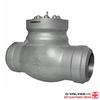
Carbon Steel Material: The valve body is made of high-quality carbon steel (WCB), which has high strength and good corrosion resistance. It can resist the erosion of various chemical media and extend the service life of the valve.
Pressure-Sealed Design: Adopts a pressure-sealed design—sealing performance enhances as the system pressure increases, ensuring reliable sealing in high-pressure environments.
Butt Welding (BW) Connection: Uses a butt-welding connection method compliant with the ASME B16.25 standard, ensuring reliable installation and sealing performance. It is suitable for high-pressure and medium flow rate conditions.
Swing Structure: The valve disc adopts a swing design, enabling smooth opening and closing, reducing fluid impact, and is suitable for medium flow rate conditions.
Bidirectional Sealing: The unique sealing design ensures reliable sealing during both forward and reverse fluid flow, effectively preventing medium leakage and guaranteeing the safe operation of the pipeline system.
Fire-Safe Design: Complies with the API 607 standard. Even in the event of a fire, the valve can maintain sealing performance to prevent medium leakage and ensure system safety.
Anti-Static Device: Equipped with a built-in anti-static device, which effectively prevents static accumulation, reduces the risk of fire and explosion, and is particularly suitable for controlling flammable and explosive media.
Compact Design: With a small volume and light weight, it is easy to install and integrate into existing systems, saving space.
Technical Specifications
Nominal Diameter: 10″ (DN250)
Pressure Rating: 1500LB (PN250)
Temperature Range: -29℃ to +425℃
Materials:
Valve Body: Carbon Steel (WCB)
Valve Disc: Carbon Steel (WCB) + Cemented Carbide (e.g., Stellite No.6)
Valve Stem: Stainless Steel (304/316)
Sealing Material: PTFE, RPTFE
Connection Method: Butt Welding (BW) Connection (compliant with ASME B16.25 standard)
Operation Mode: Automatic
Design Standards: API 600, ASME B16.34
Testing Standards: API 598, ISO 5208
Fire-Safe Design: API 607
Applicable Media: Water, oil, gas, chemical media, etc.
Application Scenarios
Oil and Gas Industry: Used in oil and gas field exploration, gathering, transportation, and processing systems to ensure reliable isolation and control of media.
Chemical Industry: Suitable for the transportation and reaction systems of various chemical media, preventing medium leakage and ensuring production safety.
Pharmaceutical Industry: Applied in pipeline systems during pharmaceutical production to ensure medium isolation and cleanliness in the drug manufacturing process.
Food and Beverage Industry: Meets food-grade requirements and is used in pipeline systems for food and beverage production, ensuring hygiene and safety.
HVAC: Used in cooling water systems, hot water systems, etc., to ensure the efficient operation of the system.
General Industrial Applications: Suitable for the control and isolation of media such as water, oil, and gas.
Advantages and Value
High Reliability: The carbon steel material and pressure-sealed design ensure the valve operates stably in high-pressure and high-temperature environments, reducing maintenance frequency and downtime.
High Safety: The fire-safe and anti-static designs, along with reliable sealing performance, effectively reduce leakage risks and protect the safety of personnel and equipment.
Automated Operation: Features automatic operation without the need for external power, reducing operating costs and maintenance workload.
Easy Installation and Maintenance: The butt-welding connection simplifies the installation process and facilitates maintenance and overhaul.
Wide Applicability: Multiple material options and a broad range of pressure and temperature ratings allow it to adapt to various complex working conditions and medium characteristics.