| Size: | |
|---|---|
| Availability: | |
| Quantity: | |
Basket Filter
J-VALVES
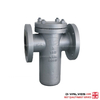
ASME B16.34 Carbon Steel A216 WCB Flange Basket Filter
ASME B16.34 Carbon Steel A216 WCB Flange Basket Filter is used for oil or other liquid pipelines to filter the debris in the pipeline, and the filter hole area is greater than 2-3 times the diameter pipe area, which is far more than the filter area of Y and T filters. Filter accuracy in the filter belongs to a filter with the best accuracy, the filter structure is different from other filters, because the shape is like a basket, so the name basket filter.
1. Carbon Steel A216 WCB Flange Basket Filter Product Specification:
● Size:2”-24”
● Pressure Rating: 150LB-2500LB
● Material: A216 WCB/A352 LCB/A217 WC6/A217 WC9/A351 CF8/A351 CF3M/A351 CF3/A351 CF8M etc
● Suitable Temperature: -80ºC~450ºC( Different temperature choose different materials).
● Suitable Medium: Water, Steam, Oil and natural gas etc.
2. Carbon Steel A216 WCB Flange Basket Filter Product Feature:
● CNC machine tool processing, high precision, good sealing .
● With sealing design, it is more safe and convenient to replace packing( Seat seal material could be decided by customer's request or according to valve's medium & temp. condition).
3. Carbon Steel A216 WCB Flange Basket Filter Scope of Application
● chemical, petrochemical production of weakly corrosive materials, such as: water, ammonia, oil, hydrocarbons;
●chemical production of corrosive materials, such as caustic soda, soda ash, concentrated sulfuric acid, carbonic acid, acetic acid, ester acid, etc.;
● low temperature materials in refrigeration, such as liquid methane, liquid ammonia, liquid oxygen and various refrigerants;
● light industrial food, pharmaceutical production of hygiene requirements of the material, such as: beer, beverages, dairy products, food pulp and medical supplies.
Tips:
We also manufacture other type valves, as check valve, globe valve, Y straine, Any item meets your interest, anything confused you, pls keep me posted, let's talk more.
J-VALVES Service:
● On Samples Buyer bear the air fee, but this fee will be reduced from order directly
● On After Sales Free replacement if there is any quality problem
● On Delivery Never delay delivery time
● On Materials Ensure material pure
● Ensure material pure
Grasp the core differences between ASME B16.34 and API 600 certifications for 6-inch 150LB WCB flanged gate valves under high-pressure working conditions. Master key distinctions including wall thickness, testing standards and material requirements via detailed comparison tables, helping you select proper valve standards and ensure project safety.
Y-strainers are critical components in industrial piping systems, designed to remove debris and protect pumps, valves, and other equipment. While much attention is often given to the strainer body and mesh, the gasket material is equally important for ensuring leak-free performance, chemical compatibility, and long-term durability. Choosing the right gasket material—PTFE, rubber, or graphite—can significantly impact system reliability and maintenance requirements.
Triple eccentric butterfly valves are advanced industrial valves designed for high-performance fluid control applications. Unlike traditional concentric or double-eccentric butterfly valves, triple eccentric designs offer superior sealing, high-pressure resistance, and minimal wear, making them ideal for critical industrial systems in oil & gas, petrochemical, power generation, and water treatment sectors.
Strainers are essential components in offshore platforms, ensuring the protection of pumps, compressors, heat exchangers, and other critical equipment from debris and particulate contamination. Offshore environments, however, present unique challenges, including high salinity, humidity, and exposure to harsh chemicals, which significantly increase the risk of corrosion. Proper anti-corrosion design is therefore critical to ensure reliability, longevity, and safety of strainer systems.
In petrochemical high-temperature systems, a valve is never just a simple mechanical part. For a 12" 300LB A105N forged steel flange globe valve, sealing stability often determines whether the system runs safely, whether shutdowns happen, and how often maintenance is needed.Many buyers notice that t
Y-strainers are a critical component in industrial fluid systems, providing effective filtration to protect pumps, valves, and other downstream equipment from debris and particulate contamination. To ensure optimal system performance, engineers must carefully consider both the pressure rating of the Y-strainer and its impact on flow characteristics.
What Makes A105 Hydraulic Ball Valve Product Range More Stable in High Pressure SystemsIn high pressure systems, valve stability is not just a technical detail. It directly affects safety, uptime, maintenance cost, and overall system performance. For oil and gas lines, hydraulic circuits, chemical t
Globe valves are widely used in industrial piping systems for regulating flow, controlling pressure, and providing precise shut-off capabilities. Correct pressure rating selection is critical to ensure system safety, longevity, and regulatory compliance. Engineers and procurement specialists must consider applicable standards, particularly ANSI (American National Standards Institute) and API (American Petroleum Institute) specifications, when selecting globe valves for industrial applications.
Check valves are critical components in industrial piping systems, ensuring unidirectional flow and preventing backflow that can damage equipment or disrupt processes. When operating in high-temperature environments—such as steam lines, chemical reactors, and power generation systems—the selection of valve materials and design becomes crucial.
Y-strainers are an essential component in industrial fluid systems, providing reliable filtration to protect downstream equipment from damage caused by debris and particulate matter. Widely used in industries ranging from chemical processing to water treatment, Y-strainers help maintain system efficiency, reduce maintenance costs, and prevent unplanned downtime.
This article uses a simple comparison table and clear language to explain why an API6D certified DN400 PN63 09Г2C trunnion ball valve is more impact resistant than a standard ball valve in high pressure natural gas stations.
These butterfly valves are commonly used in industrial fluid systems to regulate or isolate flow efficiently, offering high performance, reliability, and durability. This article explores their design features, materials, and applications, focusing on optimization for industrial operations.
Learn how API 6D certified Y strainers help reduce equipment wear in chemical transfer systems. This article explains filtration principles, selection tips, maintenance practices, and why they matter for pumps, valves, and instrumentation.
In industrial fluid systems, strain filters play a critical role in protecting pumps, valves, and other equipment by removing debris and solid particles. When designing filtration systems, selecting the right strainer material is essential to ensure long-term performance, especially in corrosive environments. Two commonly used materials are C95800 (Nickel-Aluminum Bronze) and stainless steel.
In industrial fluid systems, protecting pumps, valves, and other equipment from debris and particulate matter is essential for maintaining system efficiency and preventing costly downtime. Two of the most common filtration devices are Y-strainers and basket strainers. Both serve the same fundamental
In industrial and commercial fluid systems, strainers play a crucial role in protecting equipment, ensuring smooth operation, and preventing damage caused by debris, particles, or contaminants. Among the most commonly used types are Y-type strainers and T-strainers (also called basket strainers). While both perform filtration, their structural designs, applications, and operational characteristics differ significantly. Understanding these differences is key to selecting the right strainer for your system.
In modern fluid control systems, material selection is a critical factor that directly impacts performance, reliability, and maintenance costs. Among the various alloys used in industrial butterfly valves, C95800 nickel-aluminum bronze (NAB) has emerged as a superior choice for demanding applications, outperforming traditional materials such as stainless steel, carbon steel, and conventional bronze.
Strainers are vital components in industrial fluid systems, protecting pumps, valves, and other equipment from debris and particulate matter. Selecting the correct connection type for strainers—whether flanged or welded—has a significant impact on long-term reliability, maintenance efficiency, and system performance. This article explores the structural differences, advantages, limitations, and long-term considerations of flanged and welded strainers to guide engineers and system designers in making informed decisions.
Swing check valves are essential components in fluid piping systems, providing unidirectional flow control while preventing backflow. Their design ensures that the valve opens automatically when fluid flows forward and closes when flow reverses, protecting pumps, compressors, and pipelines. Understanding the structural components of a swing check valve is key to optimizing performance, reliability, and maintenance.
Gate valves are widely used in industrial piping systems for on/off flow control, isolation, and system maintenance. Among cast steel gate valves, the two primary types are full bore (full port) valves and reduced bore (reduced port) valves. Understanding their structural differences is essential for engineers and designers to select the right valve for performance, efficiency, and longevity.