| Size: | |
|---|---|
| Availability: | |
| Quantity: | |
Butterfly Valve
J-VALVES
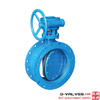
Liner EPDM Rubber Lined Seal Double Flanged Connection Butterfly Valve for Water
Quick Detail:
Size: 2"~60" (DN50~DN1500)
Pressure Rating: 150LB~900LB (PN20~PN160)
Body Material: A351CF8M/CF8/CF3/CF3M,A216WCB,A217 WC6/WC9,A105,GG25,GGG50,Titanium,BronzeC95800,C5,C12,Cryogenic steel
Seat Material: NBR,EPDM,NR,CR,SI,FPM,PTFE
Connection method: Lug,Wafer,Flange,Weld
Suitable Temperature: -46ºC~135ºC
Suitable Medium: Water, Steam, Oil and natural gas etc.
Description:
Butterfly Valve Design Standard: API609/ASME B16.34
Fully Compliant to API609
Flange Fully Compliant to ASME B16.5/ASME B16.47
The seal can be replaced, the sealing performance is reliable, and zero leakage to the seal is achieved.
The sealing material is resistant to aging, corrosion, and has a long service life.
The valve stem seal is not easily deformed so as to avoid the usual valve stem leakage. The overall support is good, stable and reliable.
The butterfly plate has an automatic centering function, which realizes the small interference fit between the butterfly valve and the valve seat.
With sealing design, it is more safe and convenient to replace packing( Seat seal material could be decided by customer's request or according to valve's medium & temp. condition).
Operation: Hand wheel, Gear,Pneumatic actuator & Electric Actuator.
Applications:
API nickel aluminum bronze C95800 lug type butterfly valve is suitable for food, medicine, chemical industry, petroleum, electric power, metallurgy, urban construction, light textile, papermaking, etc. to adjust the flow rate and intercept the medium of the water supply and drainage and gas pipelines, and those applications where ease of repairability is desired.
Competitive Advantage:
On Samples Buyer bear the air fee, but this fee will be reduced from order directly
On After Sales Free replacement if there is any quality problem
On Delivery Never delay delivery time
On Materials Ensure material pure
Ensure material pure

Why LNG ball valve seats that pass warm tests leak cold at -162°C: contraction arithmetic, cold preload, PCTFE vs PTFE, ISO 28921-2 and MSS SP-134 limits.
What API 607 proves: burn sequence, 7th-edition leak limits per NPS, cavity pressure rules, API 6FA vs ISO 10497, and the clauses buyers must check.
MSS SP-80 bronze valves: the class number is a saturated steam rating, not a pressure rating. Alloys, threads, lead-free rules and where bronze stops.
Stellite or tungsten carbide for erosive service: erosion angles, hardness ratios, HVOF vs weld overlay, the 500 C limit, and the clauses that win acceptance.
Valve coating is a defect-budget decision, not a product choice: ENP vs FBE vs sprayed aluminium, holiday arithmetic, CUI and the specs that win acceptance.
Temporary and start-up strainers for commissioning: placement, plate versus mesh, blowdown discipline and the removal record that proves it was pulled.
What MSS SP-25 marking really commits to: body symbols, three-symbol trim marking, melt identification and the certificate that closes the loop.
Why ball valves pass high-pressure seat tests and fail at 0.6 MPa: seat preload arithmetic, SPE and DPE seats, DBB vs DIB-1/DIB-2, and test-proofing specs.
RF, RTJ and butt-weld valve ends compared: how each joint seals, which duty suits it, and the four assembly errors that cause most joint leaks.
Why PTFE and PFA liners fail when the chemistry is right: permeation arithmetic, vacuum collapse, cold flow and the 11:1 expansion mismatch at the flange.
C95800 and C95500 are cast to ASTM B148; C63200 is wrought to ASTM B150. Aluminum and manganese levels decide strength, weldability and valve use.
Jacket heat load arithmetic, sulfur's 159 C viscosity trap, the separate jacket pressure test and the weld failures buyers discover in year five.
API 603 and API 600 both cover bolted bonnet gate valves, but wall thickness basis, class ceiling and casting rules decide which one you can actually buy.
ISO 5208 Rates A-G explained with real numbers, how API 598, API 6D and FCI 70-2 map across, and what metal seats can honestly achieve.
How to choose a forged or cast valve body: API 600 vs API 602 size limits, casting quality factor, NDT coverage, weld repair policy and cost crossovers.
How pressure seal bonnet valves work, why bolted bonnets stop at Class 900, seal ring materials, disassembly rules and the low-pressure leak signature.
A lift check valve closes in millimetres, not degrees. Disc lift, cracking pressure, chatter, and why steam and compressor duty punish a badly sized one.
Category A and Category B butterfly valves differ at the seat, not the body. What each one seals with, where each leaks, and what to put on the datasheet.
Butterfly vs gate valve compared by loss coefficient, pumping energy cost, weight, torque and leakage class, with selection rules and datasheet data.
How solid, flexible and split wedges differ in sealing, thermal binding and misalignment tolerance, plus selection rules and RFQ data.