| Size: | |
|---|---|
| Availability: | |
| Quantity: | |
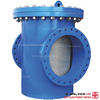
Basket Filter
J-VALVES
Main Features
Excellent High-Temperature Performance: Made of cast steel WC6, it has outstanding high-temperature strength and creep resistance, making it suitable for high-temperature and high-pressure environments.
Efficient Filtration: Equipped with a high-precision stainless steel filter screen, it can effectively remove solid particles and impurities in the fluid, protecting downstream equipment from damage.
Reliable Flange Connection: Adopts RF (Raised Face) flange connection, which complies with international standards, ensuring reliable connection and excellent sealing performance.
Convenient Maintenance: The filter is designed for easy disassembly and cleaning, allowing the filter screen to be replaced or cleaned without disassembling the entire pipeline system.
Wide Application Range: Suitable for various media such as water, steam, oil products, natural gas, corrosive media, etc.
Compact Structure:With a compact design, it occupies small space and is suitable for installation in pipeline systems with limited space.
Technical Parameters
Nominal Diameter: DN50 to DN600 (2 inches to 24 inches)
Pressure Class: PN20 to PN100 (ANSI 150LB to 600LB)
Applicable Media: Water, steam, oil products, natural gas, corrosive media, etc.
Operating Temperature: -29℃ to 425℃ (the specific temperature range depends on the seals and media)
Valve Body Material: Cast steel WC6
Filter Screen Material: Stainless steel (e.g., 304, 316)
Connection Method: Flange connection (RF)
Design Standards: API 609, MSS SP-67, MSS SP-68, EN 1092
Testing Standards: API 598, EN 12266
Structure Length: Complies with EN 558-1 standard
Application Fields
Oil and Gas Industry: Used in oil and gas transmission pipelines to filter impurities and protect pipeline systems and equipment.
Chemical Industry: Applied in the transportation and control of chemical media to prevent solid particles in the media from damaging equipment.
Power Industry: Utilized in cooling water systems and steam systems of power plants to ensure fluid cleanliness and extend equipment service life.
Water Treatment Industry: Employed in water supply systems and sewage treatment systems to filter impurities in water and protect water pumps and pipelines.
Explore DBB reduced-bore ball valve design, sealing logic, oil and gas applications, and checks for materials, end connections, ratings, and test records.
Explore welded cryogenic butterfly valve design, material selection, sealing considerations and LNG applications. Learn how J-VALVES supports industrial valve solutions for low-temperature service.
Cryogenic ball valve selection for LNG: body material limits (LC3 vs CF8M), PCTFE seat rebound, and MSS SP-134 extended bonnet length.
Learn how C63200 Y type strainers support debris removal in suitable industrial and marine systems. Explore filtration design, screen selection, pressure drop, and J-VALVES manufacturing capabilities.
Specify a 2-inch Class 300 C95800 aluminum bronze gate valve for machining shops with guidance on material, rating, design, selection, and service limits.
Explore C63200 threaded gate valve design, nickel aluminum bronze properties, threaded connections, and marine applications. Discover J-VALVES manufacturing and customization capabilities.
Explore welded cryogenic butterfly valve design, low-temperature materials, sealing technology, and LNG applications. Discover J-VALVES manufacturing capabilities and customized industrial valve solutions.
Where a 4x3" Class 900 A105N trunnion ball valve belongs — and the four duties where it does not. Thrust math, the -29C limit, seat types and failure modes.
Dear valued customers, Celebrate our great nation’s birthday. The 2026 National Day is coming. We notify you of our holiday schedule for your order and project planning. Thanks for trusting valves from the J-VALVES Team. We specialize in fluid control, providing precision valves to guarantee stable
A dual plate wafer check valve closes two half-discs on a central hinge pin, reaches about one quarter the face-to-face length of a swing check valve, and shuts in under 0.3 seconds. This guide covers the API 594 retainerless design, seven selection parameters, and the J-VALVES range from DN50 to DN1200 in Class 150 through 2500.
Inside a real trunnion mounted ball valve packing line: hydrostatic test, VCI moisture protection, IPPC crate marking, lifting points and TPI sign-off — plus the full shipping document checklist.
The Pneumatic Soft-Seated Plug Valve is a quarter-turn industrial valve designed for fast and reliable pipeline isolation. The valves shown in the image feature a compact plug valve body, flanged ends, soft-sealing structure, and pneumatic actuators, making them suitable for automated on/off service.
DN400 PN63 trunnion-mounted ball valve in 09G2S low-alloy steel: body pressure-temperature limits, GOST 9544 tightness classes, flange and design checks.
A practical guide to 12" 600LB A105 trunnion mounted ball valve design, materials, operating conditions, and industrial applications.
A 2x 1/2 in. Class 600 LF2 DBB ball valve for low-temperature service: what ASTM A350 LF2 covers, what limits the valve, and what to put in the RFQ.
Pup piece length on extended weld end ball valves is industry practice, not a standard. See how HAZ limits, ASME B16.25 bevels and B31.3 PWHT thresholds actually set the number.
Technical guide to triple offset flanged butterfly valves: offset geometry, API 609 Category B compliance, torque sizing, and the real causes of seat leakage and seizure.
What do Class 1500 and WCB actually mean?Class 1500 is a rating category, not a universal operating pressureIn industrial valve practice, 1500LB usually refers to Class 1500. It is a pressure class designation used within an applicable standards framework. It does not mean the valve is automatically
Learn where a 4" 150LB WCB swing check valve fits best in water, oil, steam, and general industrial piping, plus selection, limits, and installation tips.
Expert guide to gate valves in offshore oil & gas: API 600/6A/6D standards, seawater material selection, wedge vs slab designs, and platform isolation reliability for engineers.