 |


| Quantity: | |
|---|---|
J-VALVES
Structural Features
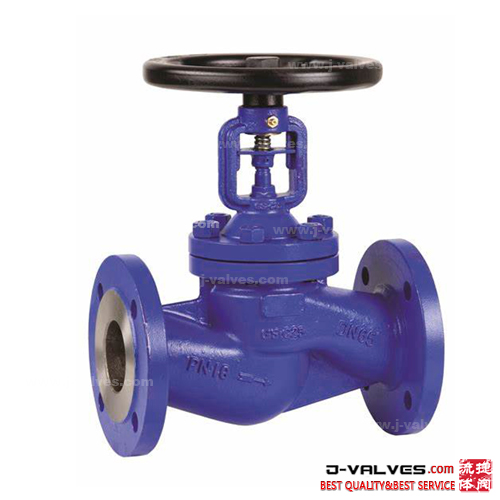
Cast Steel Material: The valve body is made of GS-C25 cast steel, which offers high strength and good corrosion resistance, suitable for various media and working conditions.
Bellow Sealing: Adopts a bellow sealing design to ensure 100% leak-free performance at the valve stem, maintaining sealing performance even under high-temperature conditions.
Dual Sealing Design: The bellow provides metal sealing to prevent leakage; in case of bellow failure, the packing can serve as a secondary seal.
Flanged Connection: Both ends adopt a flanged connection method that complies with DIN standards, ensuring convenient installation and reliable sealing.
Compact Design: With small size and light weight, it is easy to install and maintain, particularly suitable for occasions with limited space.
Multiple Operation Modes: Handwheel operation is provided, which is easy to operate and suitable for manual control. Gear, pneumatic, or electric actuators can also be optionally equipped to achieve automatic control.
Fire Safety Design: Complies with relevant fire safety standards; even in case of fire, the valve can maintain sealing performance to safeguard the safety of personnel and equipment.
Anti-Static Device: A built-in anti-static device ensures electrical continuity, prevents static accumulation, and reduces the risk of fire and explosion.
Technical Parameters
Nominal Diameter: DN65 (2 1/2 inches)
Pressure Class: PN16
Temperature Range: -29℃ to +425℃
Materials:
Valve Body: GS-C25 Cast Steel
Valve Disc: 2Cr13, 304 Stainless Steel, 316 Stainless Steel
Valve Stem: 2Cr13, 304 Stainless Steel, 316 Stainless Steel
Bellow: 304 Stainless Steel, 316 Stainless Steel
Connection Method: Flanged Connection (RF), compliant with DIN standards
Design Standard: DIN 3356
Testing Standard: EN 12266-1
Face-to-Face Dimensions: DIN 3202
Application Fields
Oil and Natural Gas Industry: Used in oil and gas field exploration, gathering, transportation, and processing systems to control the flow direction of fluids and ensure the smooth progress of the production process.
Chemical Industry: Suitable for the transportation and reaction systems of various chemical media, preventing medium leakage and ensuring production safety.
Water Treatment Industry: Applied in the water supply and drainage systems of water plants and sewage treatment plants to control the on-off and flow direction of water, improving water treatment efficiency and water quality safety.
Food and Beverage Industry: Meets food-grade requirements and is used in pipeline systems during food and beverage production to ensure hygiene and safety.
HVAC: Used in cooling water systems, hot water systems, etc., to control the on-off and flow direction of water, ensuring the efficient operation of the system.
General Industrial Applications: Suitable for the control and isolation of media such as water, oil, and gas, ensuring the safe and efficient operation of the system.
Advantages and Value
High Reliability: The GS-C25 cast steel material and bellow sealing design ensure the valve operates stably in high-pressure and high-temperature environments, reducing maintenance frequency and downtime.
High Safety: The fire protection, anti-static design, and reliable sealing performance effectively reduce the risk of leakage, safeguarding the safety of personnel and equipment.
Easy Operation: The handwheel operation mode provides a stable and labor-saving operation experience, suitable for manual control. Automatic actuators can also be optionally equipped to achieve remote control.
Convenient Installation and Maintenance: The flanged connection simplifies the installation process and also facilitates maintenance and overhaul, reducing maintenance costs.
Wide Applicability: Multiple material options and a broad range of pressure and temperature make it adaptable to various complex working conditions and medium characteristics.
Product Drawing





