| Size: | |
|---|---|
| Availability: | |
| Quantity: | |
Butterfly Valve
J-VALVES
Structural Features
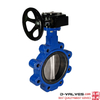
Cast Steel Material: The valve body is made of cast steel, which has high strength and good corrosion resistance. It can withstand relatively high working pressure and temperature, and is suitable for a variety of media.
Lug-Type Structure: Adopts a lug-type design. The bolt holes at both ends of the valve body allow for easy installation and disassembly, eliminating the need for flange connections. This reduces installation space and costs, while also facilitating maintenance and overhaul.
Soft Seal Design: Uses soft seal materials such as Nitrile Butadiene Rubber (NBR) or Polytetrafluoroethylene (PTFE), which offer excellent sealing performance and chemical corrosion resistance. It is suitable for a variety of media, including water, air, and oil.
Valve Stem Sealing: The valve stem is equipped with a specially designed sealing structure to prevent medium leakage and ensure operational safety.
Flexible Operation: Equipped with a manual or pneumatic operating mechanism, it is easy to operate and can quickly realize the on-off control of the valve, meeting different operational needs.
Technical Parameters
Nominal Diameter: 1/2″ to 12″ (DN15 to DN300)
Pressure Class: 150LB to 600LB (PN20 to PN100)
Temperature Range: -20℃ to +120℃
Materials:
Valve Body: Cast Steel (e.g., ASTM A126)
Valve Disc: Cast Steel
Seal Material: Nitrile Butadiene Rubber (NBR), Polytetrafluoroethylene (PTFE)
Valve Stem: Carbon Steel or Stainless Steel
Connection Method: Lug-Type Bolt Connection
Operation Mode: Manual (Handwheel Operation), Pneumatic
Design Standards: ANSI B16.34, API 609
Testing Standards: API 598, ISO 5208
Application Fields
Oil and Natural Gas Industry: Used in the exploration, gathering, transportation, and processing systems of oil and gas fields to control the flow direction of fluids and ensure the smooth progress of the production process.
Chemical Industry: Suitable for the transportation and reaction systems of various chemical media, preventing medium leakage and ensuring production safety.
Water Treatment Industry: Applied in the water supply and drainage systems of water plants and sewage treatment plants to control the on-off and flow direction of water, improving water treatment efficiency.
Food and Beverage Industry: Meets food-grade requirements and is used in pipeline systems during food and beverage production to ensure hygiene and safety.
HVAC: Used in cooling water systems, hot water systems, etc., to control the on-off and flow direction of water, ensuring the efficient operation of the system.
General Industrial Applications: Suitable for the control and isolation of media such as water, oil, and gas, ensuring the safe and efficient operation of the system.
Advantages and Value
High Reliability: The cast steel material and lug-type structural design ensure the valve operates stably in high-pressure and high-temperature environments, reducing maintenance frequency and downtime.
High Safety: The soft seal material and valve stem sealing design effectively prevent medium leakage, safeguarding the safety of personnel and equipment.
Easy Installation and Maintenance: The lug-type bolt connection simplifies the installation process, while also facilitating maintenance and overhaul, reducing maintenance costs.
Wide Applicability: Multiple material options and a broad range of pressure and temperature allow it to adapt to various complex working conditions and medium characteristics.
Competitive Advantage
On Samples Buyer bear the air fee, but this fee will be reduced from order directly
On After Sales Free replacement if there is any quality problem
On Delivery Never delay delivery time
On Materials Ensure material pure
Ensure material pure

Structural Features
Cast Steel Material: The valve body is made of cast steel, which has high strength and good corrosion resistance. It can withstand relatively high working pressure and temperature, and is suitable for a variety of media.
Lug-Type Structure: Adopts a lug-type design. The bolt holes at both ends of the valve body allow for easy installation and disassembly, eliminating the need for flange connections. This reduces installation space and costs, while also facilitating maintenance and overhaul.
Soft Seal Design: Uses soft seal materials such as Nitrile Butadiene Rubber (NBR) or Polytetrafluoroethylene (PTFE), which offer excellent sealing performance and chemical corrosion resistance. It is suitable for a variety of media, including water, air, and oil.
Valve Stem Sealing: The valve stem is equipped with a specially designed sealing structure to prevent medium leakage and ensure operational safety.
Flexible Operation: Equipped with a manual or pneumatic operating mechanism, it is easy to operate and can quickly realize the on-off control of the valve, meeting different operational needs.
Technical Parameters
Nominal Diameter: 1/2″ to 12″ (DN15 to DN300)
Pressure Class: 150LB to 600LB (PN20 to PN100)
Temperature Range: -20℃ to +120℃
Materials:
Valve Body: Cast Steel (e.g., ASTM A126)
Valve Disc: Cast Steel
Seal Material: Nitrile Butadiene Rubber (NBR), Polytetrafluoroethylene (PTFE)
Valve Stem: Carbon Steel or Stainless Steel
Connection Method: Lug-Type Bolt Connection
Operation Mode: Manual (Handwheel Operation), Pneumatic
Design Standards: ANSI B16.34, API 609
Testing Standards: API 598, ISO 5208
Application Fields
Oil and Natural Gas Industry: Used in the exploration, gathering, transportation, and processing systems of oil and gas fields to control the flow direction of fluids and ensure the smooth progress of the production process.
Chemical Industry: Suitable for the transportation and reaction systems of various chemical media, preventing medium leakage and ensuring production safety.
Water Treatment Industry: Applied in the water supply and drainage systems of water plants and sewage treatment plants to control the on-off and flow direction of water, improving water treatment efficiency.
Food and Beverage Industry: Meets food-grade requirements and is used in pipeline systems during food and beverage production to ensure hygiene and safety.
HVAC: Used in cooling water systems, hot water systems, etc., to control the on-off and flow direction of water, ensuring the efficient operation of the system.
General Industrial Applications: Suitable for the control and isolation of media such as water, oil, and gas, ensuring the safe and efficient operation of the system.
Advantages and Value
High Reliability: The cast steel material and lug-type structural design ensure the valve operates stably in high-pressure and high-temperature environments, reducing maintenance frequency and downtime.
High Safety: The soft seal material and valve stem sealing design effectively prevent medium leakage, safeguarding the safety of personnel and equipment.
Easy Installation and Maintenance: The lug-type bolt connection simplifies the installation process, while also facilitating maintenance and overhaul, reducing maintenance costs.
Wide Applicability: Multiple material options and a broad range of pressure and temperature allow it to adapt to various complex working conditions and medium characteristics.
Competitive Advantage
On Samples Buyer bear the air fee, but this fee will be reduced from order directly
On After Sales Free replacement if there is any quality problem
On Delivery Never delay delivery time
On Materials Ensure material pure
Ensure material pure

Understanding Gate Valve Design StandardsKey Standards and SpecificationsGate valves are governed by several international and national standards that define their design, manufacturing, testing, and performance characteristics. Some of the most commonly referenced standards include:• ANSI/ASME B16.
Flow Rate and Pressure DropFlow RateDefinition: The flow rate is the volume of fluid that passes through the valve per unit of time.Importance: Ensuring the check valve can handle the required flow rate without excessive pressure drop is essential for maintaining system efficiency.Considerations: Se
Welding Technology for Gate ValvesWelding Process SelectionChoosing the appropriate welding process is essential for achieving high-quality welds in gate valves. The most commonly used welding processes include:Shielded Metal Arc Welding (SMAW): Also known as stick welding, SMAW is a versatile proce
In modern industrial production, fluid control is a key link to ensure the smooth progress of the production process. As an efficient and reliable fluid control device, the ear trunnion ball valve is widely used in multiple fields such as petroleum, chemical engineering, natural gas and water treatm
What Makes C95800 Bronze So Special?C95800, also known as aluminum bronze, is a high-performance alloy renowned for its exceptional mechanical properties:Unmatched Wear Resistance: The alloy's unique composition—rich in copper, aluminum, iron, and nickel—creates a dense, hard surface that resists sc
1. Understanding Pressure Ratings (PN16 to PN100)The pressure rating of a floating flange ball valve is expressed in PN, where PN16 indicates a valve rated for 16 bar (or approximately 232 psi) and PN100 indicates a valve rated for 100 bar (or approximately 1450 psi). These ratings are determined by
Understanding Y-Type and Basket StrainersY-Type StrainersStructure and FunctionY-type strainers consist of a cylindrical body, a Y-shaped strainer basket, and connections for inlet and outlet pipes. The strainer basket, typically made of perforated metal or mesh, allows fluid to pass through while t
Project Case Study: Reliable Solid Particle Protection for Industrial PipelinesProject BackgroundIn recent years, wastewater treatment and reuse projects in Kazakhstan have continued to expand, especially in municipal infrastructure, mining support systems, and industrial process water applications.
In modern industrial fluid control systems, material selection often determines the service life and safety of the system. The ASTM B62 Bronze Gate Valve has become a core component in marine engineering, heating, ventilation, and air conditioning (HVAC) as well as water supply and drainage systems,
In the realm of industrial fluid handling, stainless steel Y-type strainers stand as a cornerstone of system reliability, efficiency, and longevity. Engineered to remove debris, particles, and contaminants from pipelines, these devices play a pivotal role in safeguarding equipment, reducing downtime
Structure and Working Principle of Double Disc Bronze Check ValveThe double disc bronze check valve is mainly composed of a valve body, two half-disc valve discs, a hinge mechanism, and sealing surfaces. The discs are connected by hinges and installed inside the valve body, enabling them to automati
In industrial fluid systems, filters are critical components that ensure system cleanliness and prevent contaminants from entering. The J-VALVES 2" 600LB CF8M Y-Type Filter is a high-efficiency, reliable filtration solution suitable for a wide range of industrial applications.1. High Pressure Resist
In industrial production, high temperature working conditions impose extremely stringent requirements on the performance of equipment. Especially in the filtration process involving high-temperature fluids, it is crucial to choose the appropriate filter material and model. Y-type strainer made of nickel aluminum bronze B148 (C95800) material have become the first choice for many engineers due to their excellent high temperature resistance and corrosion resistance.
What is a B62 Bronze Gate Valve?The B62 Bronze Gate Valve is a type of gate valve designed for industrial use, primarily in fluid control systems. Constructed from Ni-Al bronze, it offers excellent resistance to corrosion, high temperature, and pressure, making it an ideal choice for demanding envir
In the field of shipbuilding, seawater filtration is an important link to ensure the normal operation of key systems of ships. As a high-performance seawater filtration device, the C95800 strainer has become an indispensable component in shipbuilding due to its outstanding corrosion resistance, high
What Are Gate Valves?A gate valve is a type of valve that uses a sliding gate to control the flow of fluid. The gate moves vertically within the valve body to open or close the passage. When fully open, the gate valve creates a straight path for the flow of fluids, allowing minimal pressure drop. Ga
In modern industrial fluid control systems, tiny impurities are often the "invisible killers" that cause costly equipment failures. Founded in 2009, J-VALVES has been committed to the R&D and manufacturing of industrial valve solutions. Among our products, the Y-Strainer has become a core component for protecting pumps, compressors, and instrumentation systems due to its exceptional filtration efficiency and durability.
Understanding J-VALVES High-Performance Gate ValvesJ-VALVES' high-performance gate valves are designed with advanced engineering principles to ensure they can withstand the rigors of industrial use. These valves are available in a variety of sizes, materials, and configurations, allowing them to be
Selection Guide(1) Selection Based on Fluid CharacteristicsLiquid: If the fluid is water or a low-viscosity liquid with few impurities, a Y-type strainer can be selected; if the fluid is oil or contains a large amount of impurities, it is recommended to choose a basket strainer.Gas: For gas filtrati
In process systems such as petrochemical, industrial water treatment, energy, power, and fine chemical industries, pipeline clogging due to impurities remains one of the core issues affecting stable system operation. Once welding slag, rust, sand particles, or solid debris enter the pipeline, they not only cause valve jamming and pump wear but may also lead to unplanned shutdowns, resulting in high maintenance costs.