| Availability: | |
|---|---|
| Quantity: | |
Q41F
J-VALVES
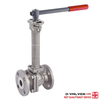
Main Features
Two-Piece Structure: The valve body adopts a two-piece design, facilitating installation and maintenance while ensuring the compactness and reliability of the valve.
Full Bore Design: Provides higher flow capacity and lower pressure loss, suitable for working conditions requiring large flow rates.
Low-Temperature Application: Specifically designed for extreme low-temperature environments, with an operating temperature range of -196℃ to 150℃. It is suitable for low-temperature media such as liquefied natural gas (LNG), ethylene, oxygen, and hydrogen.
Stainless Steel Material: The valve body and main components are made of stainless steel (such as 304, 316, etc.), featuring excellent corrosion resistance and high-temperature resistance, applicable to various media.
Flange Connection: Adopts flange connection conforming to international standards such as ASME, DIN, and JIS, with reliable sealing performance and easy integration with pipeline systems.
Fire-Safe Design: Complies with API 607 fire safety standards, ensuring sealing performance is maintained even in extreme situations such as fires.
Anti-Static Design: Prevents static accumulation caused by medium flow, improving safety.
ISO 5211 High Mounting Platform: Conforms to the international standard mounting platform, facilitating direct installation of electric, pneumatic, or manual actuators without additional adapters.
Multiple Operation Methods: Can be equipped with manual, pneumatic, electric, and other actuators to meet different operational needs.
Technical Specifications
Nominal Diameter: DN15 to DN300 (1/2 inch to 12 inches)
Pressure Rating: 150LB to 900LB (PN16 to PN100)
Applicable Media: Low-temperature media such as liquefied natural gas (LNG), ethylene, oxygen, hydrogen, liquefied petroleum gas (LPG), etc.
Applicable Temperature: -196℃ to 150℃
Valve Body Material: Stainless steel (304, 316, etc.)
Sealing Material: PTFE, RPTFE, etc.
Connection Method: Flange connection, conforming to standards such as ASME B16.5, DIN EN 1092-1
Design and Manufacturing Standards: API 6D, ASME B16.34,API 608
Testing Standards: API 598
Application Fields
Oil and Gas Industry: Used in liquefied natural gas (LNG) receiving terminals, natural gas processing plants, LNG carriers, etc.
Chemical Industry: Suitable for the transportation and control of low-temperature media such as ethylene, oxygen, and hydrogen.
Water Treatment Industry: Applied in seawater desalination, municipal water supply systems, etc.
Power Industry: Used in cooling water systems and steam systems of power plants.
Food and Beverage Industry: Applied in food processing, beverage production, etc.
Advantages
High Reliability: Undergoes strict quality inspection and factory testing to ensure the performance and reliability of each valve.
Easy Maintenance: Reasonable design facilitates disassembly and maintenance; there is no need to disassemble the entire pipeline system when replacing seals or repairing internal components.
High Safety Performance: Fire and anti-static design, suitable for hazardous environments.
Wide Application Range: Suitable for various media and working conditions, meeting the needs of different industries.
Automated Control: The ISO 5211 high mounting platform design allows easy installation of actuators, enabling automated control.
Large diameter gate valves are widely used in oil and gas, power generation, petrochemical, water treatment, and offshore industries. These valves control high-volume fluid flow under demanding operating conditions, making material selection one of the most important factors in valve performance and service life.Choosing the correct materials for valve bodies, gates, stems, and sealing components helps improve durability, corrosion resistance, pressure reliability, and operational safety.
Y-strainers are essential components in LNG transport systems, protecting pumps, valves, and flow meters from debris and solid particles. Because LNG operates at extremely low temperatures around -162°C, material selection for Y-strainers is critical for safety, durability, and system reliability.
C95800 gate valves are widely used in industrial, marine, and chemical piping systems for their corrosion resistance, durability, and reliable flow control. Choosing the correct body connection type—flanged, threaded, or welded—is critical to ensuring system integrity, ease of maintenance, and safety. Understanding the advantages of each connection type helps engineers optimize valve selection for their specific applications.
Y-strainers are widely used in industrial piping systems to protect pumps, valves, and sensitive equipment from particulates and debris. While ensuring filtration efficiency is critical, managing pressure drop and optimizing flow rate are equally important to maintain system efficiency, energy savings, and equipment longevity.
When system pressure fluctuates, valves face a higher risk of backflow, shock, and unstable sealing. Learn why more engineering projects choose the J-VALVES 3" 300LB WCB check valve to improve system stability, protect equipment, and reduce maintenance needs.
In LNG systems, a valve must do more than open and close. It must perform reliably in extreme low-temperature conditions while keeping tight sealing and safe operation.A standard ball valve may work well in normal industrial service, but when the temperature drops to -196°C, common problems become m
Triple eccentric butterfly valves are widely used in industrial piping systems where tight shut-off, high-pressure handling, and minimal leakage are required. Selecting the proper material for the valve body and disc is critical for ensuring corrosion resistance, mechanical strength, and operational reliability. The C95800 copper alloy stands out as a premium choice for these applications, offering unique advantages in demanding environments.
Y-strainers are essential in industrial piping systems for protecting pumps, valves, and downstream equipment from debris and particulate contamination. While the strainer screen is the primary filtration component, the stem and other internal materials play a crucial role in maintaining structural integrity, corrosion resistance, and long-term reliability. Understanding the compatibility between stem and screen materials ensures optimal performance, minimal maintenance, and system safety.
What is the difference between CE certification and API 6D certification for large diameter trunnion ball valves? This article compares their standards, application scope, sealing performance, and suitability for oil transportation projects in a clear and practical way.
Dual plate check valves are critical components in high-pressure industrial systems, providing reliable backflow prevention while minimizing pressure loss and maintaining system efficiency. When constructed from C95800 copper alloy, these valves combine corrosion resistance, mechanical strength, and longevity, making them ideal for demanding applications such as petrochemical plants, marine pipelines, and high-pressure water systems.
Basket strainers are critical components in industrial piping systems, designed to protect pumps, valves, heat exchangers, and other equipment from debris and particulate contamination. To maximize efficiency and safety, two primary considerations are essential: pressure rating and flow optimization. Proper design and maintenance ensure reliable operation, reduced downtime, and energy efficiency.
Gate valves are critical components in industrial piping systems, providing reliable on/off control for fluids, steam, and gases. The bonnet design—bolted or welded—is a key factor affecting maintenance, pressure integrity, and operational efficiency. For C95800 bronze alloy gate valves, understanding the differences between bolted and welded bonnets helps engineers select the optimal configuration for their applications.
Compare API 600 and ASME B16.34 for a 4" 150LB WCB flanged gate valve in high-pressure pipelines. Learn the practical differences in design scope, heavy-duty features, and selection logic with a clear table and plain-English explanation.
Industrial strainers are essential components in process and utility piping systems, protecting pumps, valves, heat exchangers, and other critical equipment from debris and particulate contamination. While the screen or mesh often receives attention, the bonnet and body design is equally critical, directly influencing mechanical strength, maintenance efficiency, and overall performance.
Floating ball valves made from C95800 (Copper Alloy) are widely used in industrial piping systems due to their excellent corrosion resistance, thermal conductivity, and durability. One of the key design considerations for these valves is the pressure rating, which determines the safe operating limits under various temperature and fluid conditions. Understanding how ANSI and API standards guide pressure rating selection is critical for ensuring system safety and performance.
Grasp the core differences between ASME B16.34 and API 600 certifications for 6-inch 150LB WCB flanged gate valves under high-pressure working conditions. Master key distinctions including wall thickness, testing standards and material requirements via detailed comparison tables, helping you select proper valve standards and ensure project safety.
Y-strainers are critical components in industrial piping systems, designed to remove debris and protect pumps, valves, and other equipment. While much attention is often given to the strainer body and mesh, the gasket material is equally important for ensuring leak-free performance, chemical compatibility, and long-term durability. Choosing the right gasket material—PTFE, rubber, or graphite—can significantly impact system reliability and maintenance requirements.
Triple eccentric butterfly valves are advanced industrial valves designed for high-performance fluid control applications. Unlike traditional concentric or double-eccentric butterfly valves, triple eccentric designs offer superior sealing, high-pressure resistance, and minimal wear, making them ideal for critical industrial systems in oil & gas, petrochemical, power generation, and water treatment sectors.
Strainers are essential components in offshore platforms, ensuring the protection of pumps, compressors, heat exchangers, and other critical equipment from debris and particulate contamination. Offshore environments, however, present unique challenges, including high salinity, humidity, and exposure to harsh chemicals, which significantly increase the risk of corrosion. Proper anti-corrosion design is therefore critical to ensure reliability, longevity, and safety of strainer systems.
In petrochemical high-temperature systems, a valve is never just a simple mechanical part. For a 12" 300LB A105N forged steel flange globe valve, sealing stability often determines whether the system runs safely, whether shutdowns happen, and how often maintenance is needed.Many buyers notice that t