| Availability: | |
|---|---|
| Quantity: | |
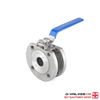
Q41F
J-VALVES
Main Features
Full-bore design: The internal flow channel of the valve has no diameter reduction, resulting in low medium flow resistance and large flow rate, making it suitable for working conditions with high flow demand.
Stainless steel material: The valve body, valve core, and valve seat are all made of stainless steel (such as 304, 316, etc.), which has excellent corrosion resistance and high-temperature resistance.
Compatibility with multiple standards: Compliant with international standards such as ANSI, DIN, JIS, and GOST, suitable for various industrial systems worldwide.
Handle operation: Equipped with a standard stainless steel handle, it is easy to operate and can quickly open or close the valve.
Fire safety design: Complies with the API 607 fire safety standard, ensuring sealing performance in extreme situations such as fires.
Anti-static design: Features anti-static function, suitable for the transportation of flammable and explosive media.
Blow-out proof stem design: The stem adopts a blow-out proof structure to ensure operational safety under high-pressure working conditions.
ISO 5211 mounting base: An optional ISO 5211 standard mounting base is available, facilitating direct installation of electric or pneumatic actuators for automated control.
Technical Specifications
Size range: 1/2 inch to 10 inches (DN15 to DN250).
Pressure rating: 150LB to 600LB (PN16 to PN100 / 10K to 60K).
Operating temperature: -196℃ to 450℃ (depending on the selection of different materials and seals).
Applicable media: Water, steam, oil, natural gas, etc.
Connection type: Flange connection, compliant with ANSI, DIN, JIS, and GOST standards.
Sealing material: PTFE, RPTFE, etc., which can be selected according to media and temperature conditions.
Valve body material: A351 CF8M/CF8/CF3/CF3M, A216 WCB, A352 LCB/LCC, F51/F53, etc.
Testing standards: Compliant with API 608, ASME B16.34, API 607, etc.
Main Features
Full-bore design: The internal flow channel of the valve has no diameter reduction, resulting in low medium flow resistance and large flow rate, making it suitable for working conditions with high flow demand.
Stainless steel material: The valve body, valve core, and valve seat are all made of stainless steel (such as 304, 316, etc.), which has excellent corrosion resistance and high-temperature resistance.
Compatibility with multiple standards: Compliant with international standards such as ANSI, DIN, JIS, and GOST, suitable for various industrial systems worldwide.
Handle operation: Equipped with a standard stainless steel handle, it is easy to operate and can quickly open or close the valve.
Fire safety design: Complies with the API 607 fire safety standard, ensuring sealing performance in extreme situations such as fires.
Anti-static design: Features anti-static function, suitable for the transportation of flammable and explosive media.
Blow-out proof stem design: The stem adopts a blow-out proof structure to ensure operational safety under high-pressure working conditions.
ISO 5211 mounting base: An optional ISO 5211 standard mounting base is available, facilitating direct installation of electric or pneumatic actuators for automated control.
Technical Specifications
Size range: 1/2 inch to 10 inches (DN15 to DN250).
Pressure rating: 150LB to 600LB (PN16 to PN100 / 10K to 60K).
Operating temperature: -196℃ to 450℃ (depending on the selection of different materials and seals).
Applicable media: Water, steam, oil, natural gas, etc.
Connection type: Flange connection, compliant with ANSI, DIN, JIS, and GOST standards.
Sealing material: PTFE, RPTFE, etc., which can be selected according to media and temperature conditions.
Valve body material: A351 CF8M/CF8/CF3/CF3M, A216 WCB, A352 LCB/LCC, F51/F53, etc.
Testing standards: Compliant with API 608, ASME B16.34, API 607, etc.
During a routine maintenance check on an offshore natural gas platform, a senior engineer noticed slight fluctuations in the production line pressure. His experience told him that such subtle changes usually indicated the accumulation of impurities, and the Y-type filter—the first line of protection in the system—was the key to determining whether the entire device could operate stably.
Among its product range, the J-VALVES DN350 PN16 WCB Electric Gate Valve stands out as a flagship product in the company’s large-scale pipeline series. With its excellent sealing performance, automatic control capability, and durability, it has gained wide trust in industries such as petrochemicals, electric power, metallurgy, and municipal water supply.
In modern industrial pipeline systems, the purity of liquid media is directly related to the operating efficiency and service life of equipment. J-VALVES Red Basket Strainer, featuring excellent structural design and high-quality material manufacturing, has become an ideal choice for numerous enterprises in the field of liquid filtration.
Understanding Dual-Filter SystemsStructure and FunctionDual-filter systems consist of two parallel filters, each equipped with valves that control the flow of fluid. The system allows for one filter to be isolated for maintenance or cleaning while the other remains operational, ensuring continuous f
Gate Valves: Design Standards and Industry NormsStructure and FunctionGate valves are linear motion valves that use a gate or wedge to control the flow of fluids. The gate moves perpendicular to the flow direction, allowing for precise control and reliable sealing. When fully open, the gate is retra
In recent years, gate valves made in China have gradually emerged in the European market. With its excellent technical strength and cost-performance advantages, it has won the recognition and favor of international customers. This achievement not only marks the rise of China's valve industry but als
In industrial fluid control, DIB double block and bleed ball valves are renowned for their high sealing performance and safety. Among them, DIB-1 and DIB-2 are suitable for different working conditions due to their design differences.In terms of structure, DIB-1 adopts a double piston effect seat (D
In modern industrial production, fluid control is a key link to ensure the smooth progress of the production process. As an efficient and reliable fluid control device, the ear trunnion ball valve is widely used in multiple fields such as petroleum, chemical engineering, natural gas and water treatm
As is known to all, in the field of LNG (liquefied natural gas) low-temperature applications, the selection and design of valves are of crucial importance, because they need to stably maintain reliable sealing performance and ensure operational stability in the harsh low-temperature environment. The
WCB material electric gate valves are industrial valves that use carbon steel casting (WCB, ASTM A216) as the valve body material and are equipped with electric actuators for drive. They are widely used in petrochemical, natural gas, metallurgy, electric power, and water supply systems to realize remote on-off control of fluids.
High voltage design and excellent sealing performanceStainless steel high-pressure ball valves are specifically designed for high-pressure environments and can withstand extremely high pressures while maintaining excellent sealing performance. Its sealing surface adopts an advanced hardened surfacin
Understanding API Standards for Cast Iron Check ValvesAPI 594: Check ValvesAPI 594 is a widely recognized standard that covers the design, materials, dimensions, pressure-temperature ratings, and testing requirements for check valves, including those made from cast iron. This standard ensures that c
Floating ball valves are versatile and reliable components used to control the flow of fluids in various industrial applications. Their robust design, ease of operation, and ability to provide a tight seal make them ideal for a wide range of industries. This article explores the diverse applications
In the realm of industrial fluid control, top ball valves stand as a testament to precision engineering, especially in demanding chemical processing applications. Boasting a 300 LB rating and constructed from premium materials like CF8M stainless steel, these valves redefine reliability, efficiency,
Structure and Principle of Fully Welded Ball ValvesThe valve body is welded from steel pipes into an integral sealed structure. The ball is connected to the driving device through the valve stem, and the opening and closing can be realized by rotating the ball. When opened, the through hole of the b
DBB ball valves play a crucial role in industrial pipeline systems. With its unique double block and bleed design, it can ensure that when the valve is closed, the medium in the pipeline is effectively blocked, and at the same time, the residual medium in the valve chamber can be discharged, greatly
In the field of shipbuilding, seawater filtration is an important link to ensure the normal operation of key systems of ships. As a high-performance seawater filtration device, the C95800 strainer has become an indispensable component in shipbuilding due to its outstanding corrosion resistance, high
In marine engineering and ship systems, the reliability of valves directly affects the safety and stability of the entire pipeline. The marine bronze check valves designed and manufactured by J-VALVES in accordance with the GB/T 12236 standard have become a key component in ship fluid control systems due to their excellent corrosion resistance, superior sealing structure, and long-term stability.
I. Filter Element Selection(I) Material SelectionStainless Steel Filter ElementFeatures: Good corrosion resistance, high strength, suitable for various acid and alkali environments, and long service life.Application Scenarios: Suitable for industries such as chemical, pharmaceutical, and food indust
In modern industrial pipeline systems, pipeline basket-type strainers serve as critical components to ensure medium purity, equipment safety, and stable system operation. As a professional manufacturer of industrial valves, J-VALVES has been dedicated to providing high-quality filtration equipment that complies with both international and national standards since its establishment in 2009.