| Availability: | |
|---|---|
| Quantity: | |
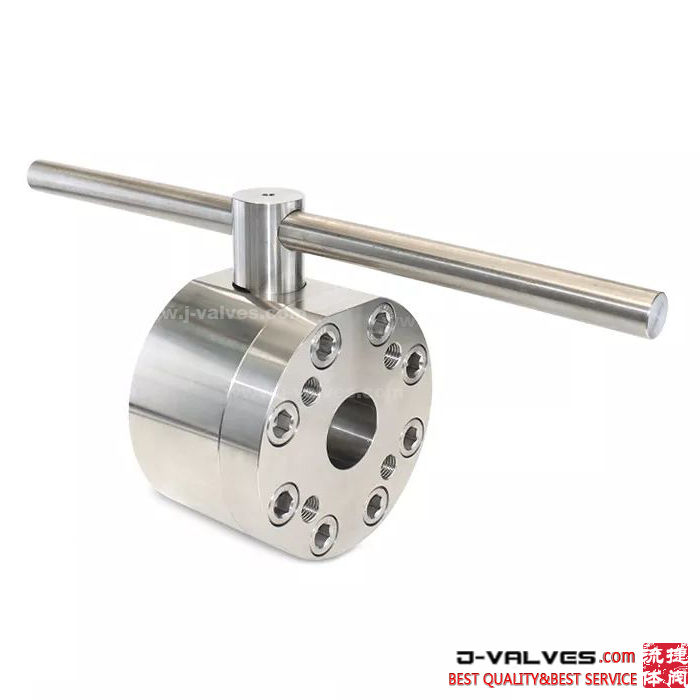
Lever Operate Forged Steel F316 Wafer Ball Valve
Main Features
High-strength material: The valve body is made of stainless steel F316, which has excellent corrosion resistance and high-temperature strength, making it suitable for various harsh working conditions.
Excellent sealing performance: Adopts PTFE or metal sealing, featuring outstanding sealing performance. It can achieve bidirectional sealing to ensure no medium leakage.
Wafer design: The Wafer structure design results in low fluid resistance and low operating torque, improving the service life and operational flexibility of the valve.
Lever operation: Equipped with a lever operating mechanism, it is easy to operate with quick opening and closing, suitable for occasions requiring frequent operation.
Wide application range: Suitable for various media such as water, steam, oil products, natural gas, and corrosive media.
Low-emission design: Equipped with low-emission packing, meeting environmental protection requirements and reducing the risk of medium leakage.
Compact structure: The compact design takes up little space, making it suitable for installation in pipeline systems with limited space.
Technical Parameters
Nominal diameter: 1/2" to 12" (DN15 to DN300)
Pressure class: 150LB to 600LB (PN20 to PN100)
Applicable media: Water, steam, oil products, natural gas, corrosive media, etc.
Operating temperature: -29℃ to 425℃ (the specific temperature range depends on the sealing components and media)
Valve body material: Stainless steel F316
Stem material: Stainless steel F316
Sealing surface material: PTFE, metal seal
Connection mode: Wafer
Operation mode: Lever operation
Design standards: API 608, ASME B16.34
Testing standard: API 598
Application Fields
Oil and gas industry: Used in oil and gas transmission pipelines to control the on-off of fluids and ensure the safe operation of pipeline systems.
Chemical industry: Suitable for the transportation and control of chemical media, preventing medium leakage and protecting equipment and personnel safety.
Power industry: Applied in cooling water systems and steam systems of power plants to ensure reliable control of fluids.
Water treatment industry: Used in water supply systems and sewage treatment systems to control the on-off of water flow.
ASME B16.34 pressure-temperature ratings explained: material groups, the Class 150-2500 table, interpolation, Special Class limits and Class versus PN.
Why a T type strainer holds more screen than a Y type, where it belongs in the line, how the blowdown is used, and what to write on the enquiry.
Valve spare parts planning: failure data, interchangeable groups, Poisson stocking levels, kit contents, shelf life, lead times and repair vs replace.
Thermal growth eats the wedge guide clearance, the stem pushes the wedge into the seat, and packing tightens itself. What to check before blaming the valve.
Steam humidification guide: psychrometric load sizing, isothermal vs adiabatic, steam quality, control valve Kv selection, absorption distance limits.
Which parts of a gate, globe or check valve actually wear, what to keep on the shelf, and why a spare bought for the same size still will not fit.
Valve storage and preservation guide: ISO 2230 elastomer shelf life, nitrogen blanket storage, VCI protection, cycling schedules and RFQ clauses.
Same size, same class, different length. Where the face-to-face number comes from, what to measure before ordering, and what a forced fit does to the joint.Same size, same class, different length. Where the face-to-face number comes from, what to measure before ordering, and what a forced fit does to the joint.
What EN 10204 3.1 and 3.2 certificates prove for valve procurement: the stockist clause, PED category rules, PMA and heat number traceability checks.
A globe valve has a front and a back. Flow under the disc or over it decides where the pressure sits when shut, and which end of the stroke is hard.
Gear operator sizing from valve torque: breakaway vs running torque, MSS SP-91 handwheel force limits, MAST stem checks, ratio and turns arithmetic.
Stem up, sideways or down: what each does to the bonnet cavity and packing, plus correct orientation for swing checks, Y strainers and butterfly valves.
Class 125 is 13.8 bar and a ductile iron main can surge to 24. Why the body material decides whether a water valve cracks or bulges, with the arithmetic.
Test water, end caps, desiccant and stem position: what six months in a yard does to a stored valve, and the incoming checks that catch it first.
Shrinkage, gas porosity, sand and hot tears in cast steel valve bodies: what radiography, ultrasonic, magnetic particle and penetrant testing each can find.
Flash vessel design and flash steam recovery: flash fraction formula, Souders-Brown sizing, hold-up, LP header and deaerator routing, failure diagnosis.
Wet shaft and dry shaft butterfly valves: what reaches the bearing, which part wears first, and why the disc stops centering in the bore.
Steam trap selection: float, inverted bucket, thermodynamic and thermostatic types, sized on load times safety factor at true differential pressure.
Between the handle and the ball there are four fits. Which one shears, which one cracks, and how a few degrees of lost motion hides a valve that never seated.
Reverse flow through a check valve has six mechanical causes. How hinge wear, debris and a moved seat ring look different, and which test finds each.

