 |


| Quantity: | |
|---|---|
2“-56”
J-VALVES
Structural Features
Trunnion Design: Adopts a fixed ball and trunnion structure, which reduces operating torque, improves the valve’s reliability and durability, and ensures stable operation in high-pressure environments.
Gear Operation: Equipped with a gear operating mechanism, it provides stable opening and closing performance, reduces operating torque, and is suitable for large-diameter and high-pressure working conditions.
Fire-Safe Design: Complies with the API 607 standard. Even in case of fire, the valve can maintain sealing performance to prevent medium leakage and ensure system safety.
Anti-Static Device: Built-in anti-static device effectively prevents static accumulation, reduces the risk of fire and explosion, and is particularly suitable for controlling flammable and explosive media.
Compact Design: Small in size and light in weight, it is easy to install and integrate into existing systems, saving space.
Multiple Connection Methods: Offers multiple connection methods such as flange connection and butt weld (BW) connection to meet different engineering requirements.
Multiple Operation Modes: Can be equipped with manual, pneumatic, electric, or hydraulic actuators to achieve remote and automated control.
Technical Parameters
Nominal Diameter: 2″ to 56″ (DN50 to DN1400)
Pressure Rating: 150LB to 2500LB (PN10 to PN420)
Temperature Range: -196℃ to +450℃
Materials:
Valve Body: Carbon Steel (WCB), Stainless Steel (304, 316), Alloy Steel
Ball: Stainless Steel (304, 316)
Valve Stem: Stainless Steel (304, 316)
Sealing Material: PTFE, RPTFE
Connection Type: Flange connection (compliant with ASME B16.5 standard), Butt Weld (BW) connection
Operation Mode: Gear Operation
Design Standards: API 6D, ASME B16.34
Testing Standards: API 598, ISO 5208
Fire-Safe Design: API 607
Applicable Media: Water, oil, gas, chemical media, etc.
Application Scenarios
Oil and Natural Gas Industry: Used in oil and gas field exploration, gathering, transportation, and processing systems to ensure reliable isolation and control of media.
Chemical Industry: Suitable for conveying and reaction systems of various chemical media, preventing medium leakage and ensuring production safety.
Pharmaceutical Industry: Applied in pipeline systems during pharmaceutical production to ensure medium isolation and cleanliness in the drug manufacturing process.
Food and Beverage Industry: Meets food-grade requirements, used in pipeline systems for food and beverage production to ensure hygiene and safety.
HVAC: Used in cooling water systems, hot water systems, etc., to ensure efficient operation of the system.
General Industrial Applications: Suitable for controlling and isolating media such as water, oil, and gas.
Advantages and Value
High Reliability: The trunnion design and gear operating mechanism ensure the valve operates stably in medium-high pressure and medium-high temperature environments, reducing maintenance frequency and downtime.
High Safety: Fire-resistant and anti-static designs, along with reliable sealing performance, effectively reduce leakage risks and protect the safety of personnel and equipment.
Operational Convenience: The gear operating mechanism provides stable opening and closing performance, reduces operating torque, and is suitable for large-diameter and high-pressure working conditions.
Easy Installation and Maintenance: The flange connection simplifies the installation process and facilitates maintenance and overhaul.
Wide Applicability: Multiple material options and a broad range of pressure and temperature ratings allow the valve to adapt to various complex working conditions and medium characteristics.
Big Size API6D Trunnion Ball Valve Product Drawing:
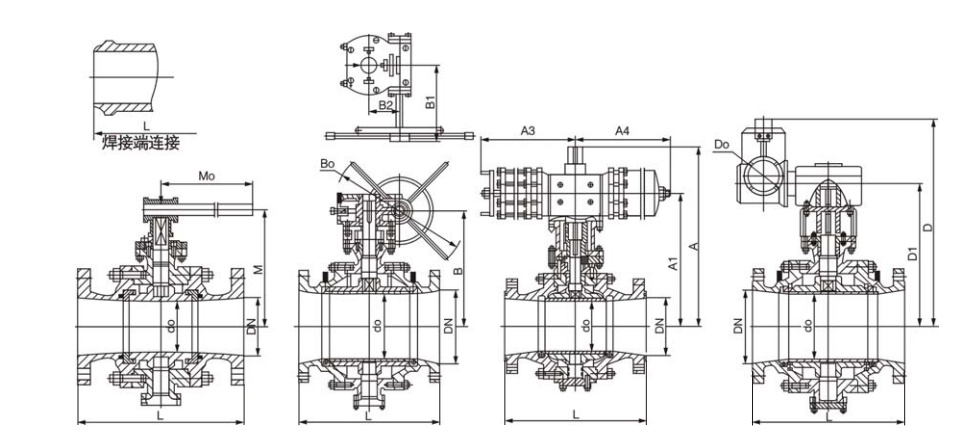
Note: All the data should be confirmed with the approved drawings of manufacturer.
Tips:
We also manufacture other type valves, as butterfly valve, check valve, globe valve, Y strainer, sanitary butterfly valve, sanitary ball and so on.
Any item meets your interest, anything confused you, pls keep me posted, let's talk more.
J-VALVES Service:
On Samples Buyer bear the air fee, but this fee will be reduced from order directly
On After Sales Free replacement if there is any quality problem
On Delivery Never delay delivery time
On Materials Ensure material pure
Ensure material pure





