| Availability: | |
|---|---|
| Quantity: | |
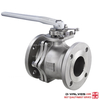
Q41F
J-VALVES
Main Features
Full Bore Design: Offers higher flow capacity and lower pressure loss, suitable for working conditions requiring large flow rates.
Floating Ball Structure: The ball automatically adjusts its sealing position under the pressure of the medium, ensuring reliable sealing performance and maintaining zero leakage even under low pressure or vacuum conditions.
ISO 5211 Low Mounting Platform: Complies with international standard mounting platforms, facilitating direct installation of electric, pneumatic, or manual actuators without additional adapters.
Stainless Steel Material: The valve body and main components are made of stainless steel (such as 304, 316, etc.), featuring excellent corrosion resistance and high-temperature resistance, suitable for various media.
Flange Connection: Adopts ASME standard flange connection with reliable sealing performance, enabling easy integration with pipeline systems.
Fire-Safe Design: Complies with API 607 fire safety standards, ensuring sealing performance is maintained even in extreme situations such as fires.
Anti-Static Design: Prevents static accumulation caused by medium flow, enhancing safety.
Multiple Operation Methods: Can be equipped with manual, pneumatic, or electric actuators to meet different operational needs.
Technical Specifications
Nominal Diameter: 1/2 inch to 12 inches (DN15 to DN300)
Pressure Rating: 150LB to 600LB
Applicable Media: Water, oil, natural gas, steam, acidic media, etc.
Applicable Temperature: -29℃ to 425℃ (the temperature range may vary depending on the sealing material)
Valve Body Material: Stainless steel (304, 316, etc.)
Sealing Material: PTFE, RPTFE, etc.
Connection Method: Flange connection, conforming to ASME B16.5 standard
Design and Manufacturing Standards: API 6D, ASME B16.34, ISO 5211
Testing Standards: API 598, API 607
Application Fields
Oil and Gas Industry: Used in oil and gas transmission pipelines, natural gas processing plants, petroleum refineries, etc.
Chemical Industry: Suitable for chemical reaction systems, acid-alkali transmission pipelines, etc.
Water Treatment Industry: Applied in seawater desalination, municipal water supply systems, etc.
Power Industry: Used in cooling water systems and steam systems of power plants.
Food and Beverage Industry: Applied in food processing, beverage production, etc.
Advantages
High Reliability: Undergoes strict quality inspection and factory testing to ensure the performance and reliability of each valve.
Easy Maintenance: Reasonable design facilitates disassembly and maintenance; there is no need to disassemble the entire pipeline system when replacing seals or repairing internal components.
High Safety Performance: Fire and anti-static design.
Wide Application Range: Suitable for various media and working conditions, meeting the needs of different industries.
Automated Control: The ISO 5211 low mounting platform design allows easy installation of actuators, enabling automated control.
Main Features
Full Bore Design: Offers higher flow capacity and lower pressure loss, suitable for working conditions requiring large flow rates.
Floating Ball Structure: The ball automatically adjusts its sealing position under the pressure of the medium, ensuring reliable sealing performance and maintaining zero leakage even under low pressure or vacuum conditions.
ISO 5211 Low Mounting Platform: Complies with international standard mounting platforms, facilitating direct installation of electric, pneumatic, or manual actuators without additional adapters.
Stainless Steel Material: The valve body and main components are made of stainless steel (such as 304, 316, etc.), featuring excellent corrosion resistance and high-temperature resistance, suitable for various media.
Flange Connection: Adopts ASME standard flange connection with reliable sealing performance, enabling easy integration with pipeline systems.
Fire-Safe Design: Complies with API 607 fire safety standards, ensuring sealing performance is maintained even in extreme situations such as fires.
Anti-Static Design: Prevents static accumulation caused by medium flow, enhancing safety.
Multiple Operation Methods: Can be equipped with manual, pneumatic, or electric actuators to meet different operational needs.
Technical Specifications
Nominal Diameter: 1/2 inch to 12 inches (DN15 to DN300)
Pressure Rating: 150LB to 600LB
Applicable Media: Water, oil, natural gas, steam, acidic media, etc.
Applicable Temperature: -29℃ to 425℃ (the temperature range may vary depending on the sealing material)
Valve Body Material: Stainless steel (304, 316, etc.)
Sealing Material: PTFE, RPTFE, etc.
Connection Method: Flange connection, conforming to ASME B16.5 standard
Design and Manufacturing Standards: API 6D, ASME B16.34, ISO 5211
Testing Standards: API 598, API 607
Application Fields
Oil and Gas Industry: Used in oil and gas transmission pipelines, natural gas processing plants, petroleum refineries, etc.
Chemical Industry: Suitable for chemical reaction systems, acid-alkali transmission pipelines, etc.
Water Treatment Industry: Applied in seawater desalination, municipal water supply systems, etc.
Power Industry: Used in cooling water systems and steam systems of power plants.
Food and Beverage Industry: Applied in food processing, beverage production, etc.
Advantages
High Reliability: Undergoes strict quality inspection and factory testing to ensure the performance and reliability of each valve.
Easy Maintenance: Reasonable design facilitates disassembly and maintenance; there is no need to disassemble the entire pipeline system when replacing seals or repairing internal components.
High Safety Performance: Fire and anti-static design.
Wide Application Range: Suitable for various media and working conditions, meeting the needs of different industries.
Automated Control: The ISO 5211 low mounting platform design allows easy installation of actuators, enabling automated control.
In the world of industrial processing, pipeline integrity is paramount. Any contamination within pipelines can result in costly damage to machinery, reduced efficiency, and potential downtime. This is where Basket and Y-type strainers come into play, serving as critical filtration devices for a vari
Y-type strainerStructural DesignThe Y-type strainer is shaped like the letter "Y". It is mainly composed of nozzles, the main pipe, a strainer screen, flanges and fasteners. The strainer screen is installed inside the main pipe. After the fluid enters from the inlet, it is strainered through the str
In industrial pipeline systems, protecting critical equipment from solid contaminants is essential for long-term reliability and operational safety. This is where the J-VALVES basket strainer plays a vital role. Designed for high flow capacity and efficient particle removal, it is widely used across industries where fluid cleanliness directly impacts system performance.
Understanding Double Block-and-Bleed (DBB) Ball ValvesDBB ball valves are designed to provide two independent seals (one upstream and one downstream) and a bleed port to vent any trapped fluid between the seals. This design ensures that the valve can safely isolate a section of the pipeline and reli
I. Application of Y-Type Filters in Fine Chemicals(1) Structural and Performance Characteristics Y-type filters are named for their shape resembling the letter "Y". They are mainly composed of connecting pipes, main pipes, filter screens, flanges and fasteners. Its filter screen is usually made of s
To our valued clients:On this cozy Christmas season, the J-VALVES team sends you warmest wishes—may your holidays be filled with joyful laughter, your ongoing projects run smoothly with efficiency, and the coming year bring more fruitful & win-win collaborations between us.J-VALVES specializes in pr
In industrial fluid systems, strainers are often not the most eye-catching equipment, but they are critical components that determine system stability and equipment lifespan. As can be seen from the images, J-VALVES Basket / Y-Type Strainers feature a striking red heavy-duty valve body design with a compact structure and clearly visible filtration elements, fully embodying their reliable positioning in industrial-grade applications.
Why Do Many Industrial Systems Still Suffer From Unexpected Pressure Drop and Blockage?<br /> <br /> In many industrial piping systems, Y strainers are considered “basic components” — simple, reliable, and easy to install. However, in real-world operation, engineers and maintenance teams often encounter recurring issues that lead to pressure loss, frequent shutdowns, and even downstream equipment damage.
When it comes to ensuring the efficiency and longevity of fluid systems, the selection of strainers plays a pivotal role. Two of the most commonly used types are Basket Strainers and Y-Type Strainers, both of which are designed to filter out debris and impurities from the fluid. Each type has distin
In industrial fluid systems, Duplex type strainer are essential for ensuring continuous operation by providing redundancy and allowing maintenance without interrupting the flow. Selecting the right material for filter cartridges is crucial, especially in demanding environments where corrosion and we
Understanding Y-Type StrainersStructure and FunctionY-type strainers consist of a cylindrical body, a Y-shaped strainer basket, and connections for inlet and outlet pipes. The strainer basket, typically made of perforated metal or mesh, allows fluid to pass through while trapping solid particles. Th
In modern industrial pipeline systems, protecting downstream equipment from solid contaminants is a critical task. J-VALVES Y-Strainers are engineered to provide efficient, durable, and low-maintenance filtration, ensuring long-term operational stability across a wide range of industrial applications.
Y-type strainers are critical components in industrial fluid systems, designed to filter out solid impurities and protect downstream equipment. The selection of the appropriate material for Y-type strainers is essential, especially when considering the impact on pressure drop and overall system effi
Understanding S31803 Duplex SteelMaterial PropertiesS31803 duplex steel is known for its high strength and superior corrosion resistance. It contains a balanced mixture of austenitic and ferritic phases, providing excellent resistance to pitting and crevice corrosion.ApplicationsS31803 is widely use
In extreme working conditions such as liquefied natural gas (LNG), cryogenic chemical engineering, high-temperature refining and chemical processing, and energy transmission, valves are not only fluid control components, but also key nodes ensuring system safety and long-term stable operation. Cryogenic/High-Temperature Trunnion Mounted Ball Valves have emerged as a mature solution widely adopted in such high-demand scenarios.
In industrial water treatment systems, filtration equipment is often regarded as a basic component, yet in actual operation, it directly impacts the stability, equipment service life, and operation & maintenance (O&M) costs of the entire pipeline network.
The Double Ball Floating Ball Valve is an advanced fluid control device, specially suitable for high-pressure, high-temperature and low-temperature environments in industries such as petroleum, natural gas and chemical engineering. With its unique double isolation design and excellent sealing perfor
The C95800 bronze ball valve is a high-performance valve product, widely used in working environments with corrosive media such as seawater, concentrated brine, sulfate and various chloride solutions. Its selection requires a comprehensive consideration of multiple factors to ensure the performance,
Understanding Y-Type and Basket StrainersY-Type StrainersY-type strainers are named for their Y-shaped design, which includes a cylindrical body and a strainer basket. They are typically used for coarse filtration to remove larger particles from fluid streams.Structure and Function: The strainer bas
Understanding Wedge Gate ValvesWedge gate valves are a type of gate valve that uses a wedge-shaped gate to control the flow of fluid. The wedge design allows the gate to seal tightly against the valve seats, providing a reliable shutoff mechanism. These valves are available in various materials and