| Availability: | |
|---|---|
| Quantity: | |
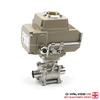
Electric Operated 3PC Stainless Steel Welding Floating Ball Valve
Product Features
Stainless Steel Material: The valve body, ball and valve stem are all made of stainless steel, with outstanding corrosion resistance and high-temperature resistance performance.
Floating Ball Design: The ball can float freely under the action of fluid pressure, enhancing the sealing performance and reducing the operating torque at the same time.
Full Bore Structure: The inner diameter of the passage is consistent with that of the pipeline, reducing fluid resistance and improving the fluid passing capacity.
Welding Connection: The welding connection method is adopted to enhance the structural strength of the valve, which is suitable for high-pressure and high-temperature working conditions.
Electric Actuator: Equipped with an electric actuator to achieve precise control and automated operation and improve work efficiency.
ISO 5211 Mounting Platform: It supports the ISO 5211 standard mounting platform, facilitating the installation and replacement of actuators.
Fire Safety: It complies with the API 607 fire safety standard, ensuring safety under extreme conditions such as fires.
Anti-static Design: It is equipped with anti-static devices to prevent static electricity accumulation and improve safety.
Multiple Sealing Materials: The valve seat adopts high-performance sealing materials such as PTFE and RPTFE, which can maintain reliable sealing performance under different temperature and medium conditions.
Technical Parameters
Size Range: 1/4" ~ 4" (DN6 ~ DN100)
Working Pressure: 1000WOG ~ 2000WOG
Working Temperature: -20 °C ~ 300 °C
Applicable Media: Water, oil, gas, steam and some corrosive liquids.
Connection Method: Welding connection (butt welding BW, socket welding SW)
Material:
Valve Body: Stainless steel 304, 316, 316L.
Ball: Stainless steel 304, 316
Valve Stem: Stainless steel 304, 316
Seals: PTFE, RPTFE
Operation Method: Electric operation. A manual operation device can be optionally equipped.
Actuator: Electric actuator, supporting multiple control signals (such as 4-20mA, on-off signals, etc.).
Application Fields
Chemical Industry: Used for transporting corrosive liquids and gases.
Petroleum and Natural Gas: Used in petroleum and natural gas pipeline systems.
Pharmaceutical Industry: Used for handling high-purity fluids.
Food and Beverage: Used for fluid control in food processing and beverage production.
Water Treatment: Used for fluid control in water treatment systems.
Industrial Pipelines: Used for the automated control of various industrial pipeline systems.
Electric Operated 3PC Stainless Steel Welding Floating Ball Valve
Product Features
Stainless Steel Material: The valve body, ball and valve stem are all made of stainless steel, with outstanding corrosion resistance and high-temperature resistance performance.
Floating Ball Design: The ball can float freely under the action of fluid pressure, enhancing the sealing performance and reducing the operating torque at the same time.
Full Bore Structure: The inner diameter of the passage is consistent with that of the pipeline, reducing fluid resistance and improving the fluid passing capacity.
Welding Connection: The welding connection method is adopted to enhance the structural strength of the valve, which is suitable for high-pressure and high-temperature working conditions.
Electric Actuator: Equipped with an electric actuator to achieve precise control and automated operation and improve work efficiency.
ISO 5211 Mounting Platform: It supports the ISO 5211 standard mounting platform, facilitating the installation and replacement of actuators.
Fire Safety: It complies with the API 607 fire safety standard, ensuring safety under extreme conditions such as fires.
Anti-static Design: It is equipped with anti-static devices to prevent static electricity accumulation and improve safety.
Multiple Sealing Materials: The valve seat adopts high-performance sealing materials such as PTFE and RPTFE, which can maintain reliable sealing performance under different temperature and medium conditions.
Technical Parameters
Size Range: 1/4" ~ 4" (DN6 ~ DN100)
Working Pressure: 1000WOG ~ 2000WOG
Working Temperature: -20 °C ~ 300 °C
Applicable Media: Water, oil, gas, steam and some corrosive liquids.
Connection Method: Welding connection (butt welding BW, socket welding SW)
Material:
Valve Body: Stainless steel 304, 316, 316L.
Ball: Stainless steel 304, 316
Valve Stem: Stainless steel 304, 316
Seals: PTFE, RPTFE
Operation Method: Electric operation. A manual operation device can be optionally equipped.
Actuator: Electric actuator, supporting multiple control signals (such as 4-20mA, on-off signals, etc.).
Application Fields
Chemical Industry: Used for transporting corrosive liquids and gases.
Petroleum and Natural Gas: Used in petroleum and natural gas pipeline systems.
Pharmaceutical Industry: Used for handling high-purity fluids.
Food and Beverage: Used for fluid control in food processing and beverage production.
Water Treatment: Used for fluid control in water treatment systems.
Industrial Pipelines: Used for the automated control of various industrial pipeline systems.
<br /> In industrial fluid systems, check valves and butterfly valves are two common types of valves, each with its own unique functions and application scenarios. Selecting the appropriate valves is crucial for ensuring the safe and efficient operation of the system.
Understanding Y-Type StrainersStructure and FunctionY-type strainers consist of a cylindrical body, a Y-shaped strainer basket, and connections for inlet and outlet pipes. The strainer basket, typically made of perforated metal or mesh, allows fluid to pass through while trapping solid particles. Th
DBB ball valves play a crucial role in industrial pipeline systems. With its unique double block and bleed design, it can ensure that when the valve is closed, the medium in the pipeline is effectively blocked, and at the same time, the residual medium in the valve chamber can be discharged, greatly
High voltage design and excellent sealing performanceStainless steel high-pressure ball valves are specifically designed for high-pressure environments and can withstand extremely high pressures while maintaining excellent sealing performance. Its sealing surface adopts an advanced hardened surfacin
In the petrochemical industry, as a key component in pipeline systems, the selection of y-type strainers is of crucial importance. Choosing the appropriate materials can not only ensure the performance and service life of the strainers but also maximize the cost-benefit in the long-term operation.
During the process of a certain large-scale ship manufacturing and renovation project, there was an urgent need to find a valve that could adapt to the complex marine environment and meet the diverse needs of the ship's efficient operation. At that time, the C95800 triple eccentric lug butterfly valve under J-VALVES stood out with its outstanding comprehensive performance and won the bid successfully in the project tender.
After a month's production cycle, 12 sets of 12-inch swing check valves have been completed normally and delivered to customers.
Over the past decade, industrial-grade stainless steel DBB (Double Block & Bleed) ball valves have gradually evolved from a "high-end optional component" to an indispensable key safety element in systems such as oil and gas, chemical engineering, refining, offshore engineering, hydrogen energy, and high-purity medium transportation. As global factories continue to raise requirements for safety levels, emission standards, and automation capabilities, DBB ball valves are accelerating the replacement of traditional dual-valve structures and have become one of the product categories with the greatest growth potential in future industrial fluid systems.
What is the most troublesome issue for engineers in applications such as oil refining, natural gas transportation, steam systems, metallurgy, and power plants?<br /> ——It lies in high temperature, high pressure, frequent opening and closing, strict sealing requirements, and the risk of system shutdown or safety hazards once leakage occurs.
In modern industrial pipeline systems, ensuring the safe, stable, and continuous operation of equipment is a top priority for every engineer. However, whether in petrochemical plants, natural gas transmission and distribution networks, boiler steam systems, or large-scale cooling water circulation networks, the presence of fluid flow inevitably leads to solid contaminants such as particles, impurities, rust, and welding slag.
In every industrial site, there are "silent yet crucial" roles. They lack a striking appearance and do not make loud noises, yet they take on irreplaceable responsibilities under the most dangerous and harsh operating conditions.
Against the backdrop of accelerated integration of the global energy and industrial equipment supply chain, DBB (Double Block and Bleed) ball valves that can simultaneously meet the European CE certification and North American API 6D standard have become a critical choice for oil, natural gas, chemical, LNG, and high-integrity pipeline systems.
In the global energy industry, LNG (Liquefied Natural Gas) liquefaction projects have nearly harsh requirements for the ultra-low temperature resistance, sealing reliability, and structural strength of valve equipment. As one of the world’s largest LNG exporters, a certain country launched an expansion project for a large-scale LNG liquefaction plant.
Addressing these industry pain points, J-VALVES leverages its industrial valve manufacturing experience since 2009 to launch the Stainless Steel 600LB / 304 T-Strainer. With high strength, high reliability, and customization capabilities, this product solves the key concerns of enterprises in real-world operating conditions.
Since 2009, J-VALVES has been deeply engaged in the field of industrial valves and filtration products. Among its offerings, this 150LB WPB flanged basket filter, with its robust structural design, excellent filtration performance, and reliable, durable materials, is widely used in industries such as petrochemicals, natural gas, shipping, water supply, and power plants. It is regarded as a professional-grade filtration solution for long-term stable operating conditions.
Understanding Your Application RequirementsBefore selecting a gate valve, it is essential to understand the specific requirements of your industrial application. This includes:• Fluid Type: Determine the type of fluid that will flow through the valve. Common fluids include water, oil, steam, gases,
In modern industrial pipeline network systems, fluid control often faces pain points such as insufficient corrosion resistance, inflexible flow direction switching, and difficulty in ensuring long-term reliability. So, can enterprises find a 4-way ball valve that combines durability, flexibility, and intelligent compatibility? The J-VALVES Aluminum Bronze 4-Way Ball Valve may be the key to solving this problem.
Based on the unique physical properties of LNG, J-VALVES has designed and launched a dedicated LNG Y-Type Filter. Through systematic optimization of materials, structure, flow channels, sealing, and lining technologies, this filter maintains high strength, high cleanliness, and extremely low operational risks even in a low-temperature environment of -162°C.
During a routine maintenance check on an offshore natural gas platform, a senior engineer noticed slight fluctuations in the production line pressure. His experience told him that such subtle changes usually indicated the accumulation of impurities, and the Y-type filter—the first line of protection in the system—was the key to determining whether the entire device could operate stably.
Among its product range, the J-VALVES DN350 PN16 WCB Electric Gate Valve stands out as a flagship product in the company’s large-scale pipeline series. With its excellent sealing performance, automatic control capability, and durability, it has gained wide trust in industries such as petrochemicals, electric power, metallurgy, and municipal water supply.