| Availability: | |
|---|---|
| Quantity: | |
2“-48”
J-VALVES
Structural Features
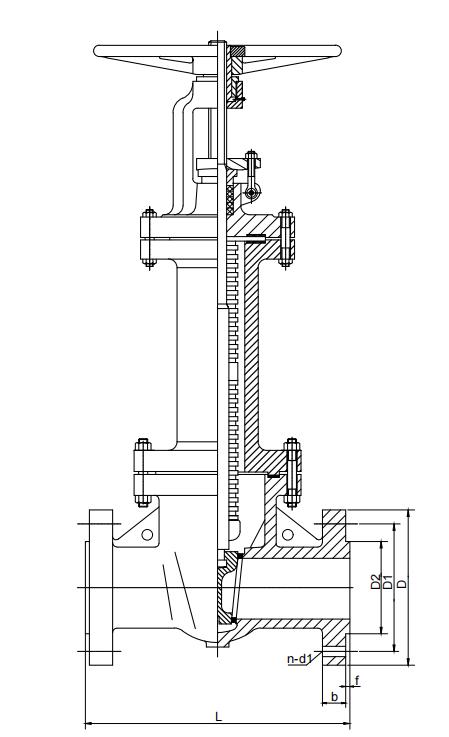
Bellows Seal: Uses long-life bellows (e.g., 321 stainless steel, Inconel, etc.) to provide excellent sealing performance and prevent medium leakage. It is particularly suitable for controlling toxic, harmful, flammable, or explosive media.
Non-Rotating Stem: The stem is designed to be non-rotating, which prevents torsion of the bellows and extends the bellows’ service life.
Dual Seal: Equipped with a dual seal system, including bellows and graphite packing, to ensure sealing performance in high-pressure and high-temperature environments.
Welded Seat: The seat is made of welded cemented carbide (e.g., Stellite 6), offering excellent wear resistance and long service life.
Flange Connection: Adopts a standard flange connection method compliant with the ASME B16.5 standard, ensuring reliable installation and sealing performance.
Compact Design: With a small volume and light weight, it is easy to install and integrate into existing systems, saving space.
Multiple Operation Modes: Can be equipped with manual, pneumatic, electric, or hydraulic actuators to realize remote automated control.
Technical Specifications
Nominal Diameter: 2″ to 48″ (DN50 to DN1200)
Pressure Rating: ASME Class 150 to 600
Temperature Range: -29℃ to +425℃
Materials:
Valve Body: Carbon Steel (WCB), Stainless Steel (304, 316), Alloy Steel
Valve Stem: Stainless Steel (316), Alloy Steel
Bellows: 321 Stainless Steel, Inconel
Sealing Material: PTFE, Graphite
Connection Method: Flange Connection (compliant with ASME B16.5 standard), Butt Welding (BW)
Operation Mode: Manual, Pneumatic, Electric, Hydraulic
Design Standards: API 600, ASME B16.34
Testing Standards: API 598, ISO 5208
Fire-Safe Design: API 607
Applicable Media: Water, oil, gas, chemical media, etc.
Application Scenarios
Oil and Gas Industry: Used in oil and gas field exploration, gathering, transportation, and processing systems to ensure reliable isolation and control of media.
Chemical Industry: Suitable for the transportation and reaction systems of various chemical media, preventing medium leakage and ensuring production safety.
Pharmaceutical Industry: Applied in pipeline systems during pharmaceutical production to ensure medium isolation and cleanliness in the drug manufacturing process.
Food and Beverage Industry: Meets food-grade requirements and is used in pipeline systems for food and beverage production, ensuring hygiene and safety.
HVAC: Used in cooling water systems, hot water systems, etc., to ensure the efficient operation of the system.
General Industrial Applications: Suitable for the control and isolation of media such as water, oil, and gas.
Advantages and Value
High Reliability: The bellows seal design and non-rotating stem ensure the valve operates stably in medium-to-high pressure and medium-to-high temperature environments, reducing maintenance frequency and downtime.
High Safety: The fire-safe and anti-static designs, along with reliable sealing performance, effectively reduce leakage risks and protect the safety of personnel and equipment.
Automated Operation: Multiple actuator options enable remote control and automated operation, enhancing the flexibility and safety of the system.
Easy Installation and Maintenance: The flange connection simplifies the installation process and facilitates maintenance and overhaul.
Wide Applicability: Multiple material options and a broad range of pressure and temperature ratings allow it to adapt to various complex working conditions and medium characteristics.
Specifications:
J-VALVES Competitive Advantage:
On Samples Buyer bear the air fee, but this fee will be reduced from order directly
On After Sales Free replacement if there is any quality problem
On Delivery Never delay delivery time
On Materials Ensure material pure
Ensure material pure
A practical guide to 12" 600LB A105 trunnion mounted ball valve design, materials, operating conditions, and industrial applications.
A 2x 1/2 in. Class 600 LF2 DBB ball valve for low-temperature service: what ASTM A350 LF2 covers, what limits the valve, and what to put in the RFQ.
Technical guide to triple offset flanged butterfly valves: offset geometry, API 609 Category B compliance, torque sizing, and the real causes of seat leakage and seizure.
What do Class 1500 and WCB actually mean?Class 1500 is a rating category, not a universal operating pressureIn industrial valve practice, 1500LB usually refers to Class 1500. It is a pressure class designation used within an applicable standards framework. It does not mean the valve is automatically
Learn where a 4" 150LB WCB swing check valve fits best in water, oil, steam, and general industrial piping, plus selection, limits, and installation tips.
Trunnion-mounted ball valves carry pipeline loads on bearings, cutting operating torque in large-bore service. Compare designs, seat sealing and API 6D selection criteria.
The Pneumatic Soft-Seated Plug Valve is a quarter-turn industrial valve designed for fast and reliable pipeline isolation. The valves shown in the image feature a compact plug valve body, flanged ends, soft-sealing structure, and pneumatic actuators, making them suitable for automated on/off service.
A 10000 PSI DBB ball valve combines dual balls, clamp ends and a reduced bore for verifiable double isolation. Here is how to specify one correctly.
A Dual Plate Wafer Check Valve is a compact non-return valve designed to prevent reverse flow in industrial piping systems. Its wafer-style body requires less installation space than many conventional flanged check valve designs, while the two spring-loaded plates provide responsive flow control.
J-Valves API 599 plug valves are engineered for petrochemical pipelines. Heavy-duty flange type, high temperature & pressure resistance, customized actuators for oil & gas service.
The internal structure of a strainer directly affects filtration efficiency, pressure drop, maintenance, and service life. C95800 Y-Type Strainers are designed for applications where solid-particle removal and corrosion resistance are both important, particularly in marine, seawater, offshore, and industrial piping systems.
Learn design, material & pressure test requirements of Y‑type strainers under API 6D, API 598. Master key selection criteria for oil, gas & petrochemical projects to avoid pipeline equipment failure.
Based on ISO 10631, ISO 5752 international standards, this guide covers key selection points for wafer centerline resilient‑seated butterfly valves, including material, pressure rating, size, actuator type, helping engineers avoid piping system failures.
C95800 Check Valves are widely used in marine, seawater, offshore, shipbuilding, and industrial piping systems where corrosion resistance and reliable flow-direction control are important. C95800 Nickel Aluminum Bronze offers a practical material solution for demanding water-based environments.
The Flanged Triple Offset Butterfly Valve is widely used in large-diameter industrial pipelines where reliable shut-off, compact construction, and low operating friction are important.
Real‑factory shot of finished 3‑piece trunnion ball valves. Manufactured per API 6D & ASME B16.34. Worm‑gear operated flange‑end ball valves for oil‑gas, chemical high‑pressure pipeline. Customization & third‑party test available.
Process bellows globe valves eliminate stem leakage for petrochemical plants. Learn their advantages for high‑temp, toxic media and petrochemical engineering applications.
ASME B16.34 compliant 4‑inch Class150 C95800 aluminium bronze Y‑type strainer. Flange end, corrosion‑resistant for seawater, brine & marine process pipeline systems.
‑196℃ long stem cryogenic ball valve is engineered for LNG service to deliver reliable system isolation, complying with authoritative industry standards. It analyzes key selection criteria, structural advantages and LNG application scenarios of cryogenic ball valves.
DN250 PN25 WCB triple eccentric lug‑type butterfly valve for petrochemical, power plant and heating pipeline. Learn about ASME, API compliance, material specification and lug‑structure advantages.