Views: 0 Author: J-VALVES Publish Time: 2026-05-19 Origin: Site


Floating ball valves made from C95800 (Copper Alloy) are widely used in industrial piping systems due to their excellent corrosion resistance, thermal conductivity, and durability. One of the key design considerations for these valves is the pressure rating, which determines the safe operating limits under various temperature and fluid conditions. Understanding how ANSI and API standards guide pressure rating selection is critical for ensuring system safety and performance.
C95800 (Copper-Beryllium-Nickel alloy) is known for:
Superior corrosion resistance, especially in seawater, brine, and chemical environments.
Excellent mechanical strength for moderate to high-pressure applications.
Compatibility with marine, chemical, and industrial fluids.
The floating ball is not anchored; it moves slightly along the flow direction to seal against the downstream seat.
Provides tight shutoff in clean fluids or moderate pressures.
Simpler and cost-effective compared to trunnion-mounted ball valves.
The pressure rating indicates the maximum allowable working pressure (MAWP) of a valve at a given temperature. It ensures:
Structural integrity under normal operating conditions.
Prevention of leaks, deformation, or catastrophic failure.
Compliance with industrial safety and regulatory standards.
Incorrect selection can lead to premature valve failure, fluid leaks, and operational downtime.
The American National Standards Institute (ANSI) provides pressure class designations for valves, typically expressed as 150, 300, 600, 900, 1500, and 2500.
Each class represents a maximum working pressure at 100°F (38°C).
Pressure decreases with increasing temperature; tables are provided in ANSI B16.34.
Standardized flanges and valve dimensions ensure interchangeability.
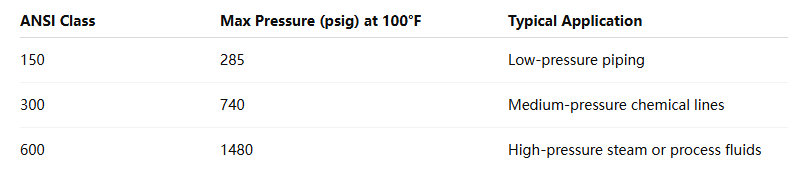
C95800 floating ball valves are commonly available in ANSI 150–600 classes, suitable for most industrial applications.
The American Petroleum Institute (API) provides pressure-temperature ratings under API 608 for ball valves:
Includes temperature derating for different valve materials.
Focuses on petroleum, chemical, and gas service.
Ensures valve performance under cyclic and dynamic loading.
API ratings often correlate closely with ANSI classes but include more detailed temperature adjustments.
C95800 valves are approved for API 608 Class 150–600, making them suitable for offshore and chemical processing environments.
When selecting a pressure rating for a C95800 floating ball valve:
Determine system pressure and temperature: Include surge, start-up, and test pressures.
Consult ANSI or API tables: Verify MAWP for the selected class and material.
Consider valve size: Larger valves may have lower allowable pressure due to mechanical stress.
Check fluid compatibility: Ensure C95800 can resist corrosion from the specific media.
Include safety margin: Industry best practice usually applies 10–20% design margin above operating pressure.
C95800 floating ball valves with ANSI or API pressure ratings are commonly used in:
Marine and seawater systems: Excellent corrosion resistance.
Chemical processing: Handles acids, salts, and solvents.
Oil and gas pipelines: Compliant with API 608 for petroleum services.
HVAC and industrial water systems: Reliable performance at moderate pressures.
Choosing the right pressure rating for C95800 floating ball valves is essential for system reliability and safety. Engineers must consider ANSI or API standards, temperature derating, valve size, and fluid compatibility.
ANSI classes provide standardized pressure designations for general industrial use.
API standards add additional safety criteria for chemical and petroleum applications.
By understanding these standards and matching them to operational conditions, engineers can ensure optimal valve performance, longevity, and regulatory compliance.